LwS EXTRA: “Thunderstorm” at Lewistown, PA
I know many of you are looking at this page and wondering when the heck the next episode of Living with Steam that features John Prophet’s recordings will be published. Well… soon. I promise. Life and other responsibilities constantly get in the way. But in the meantime…
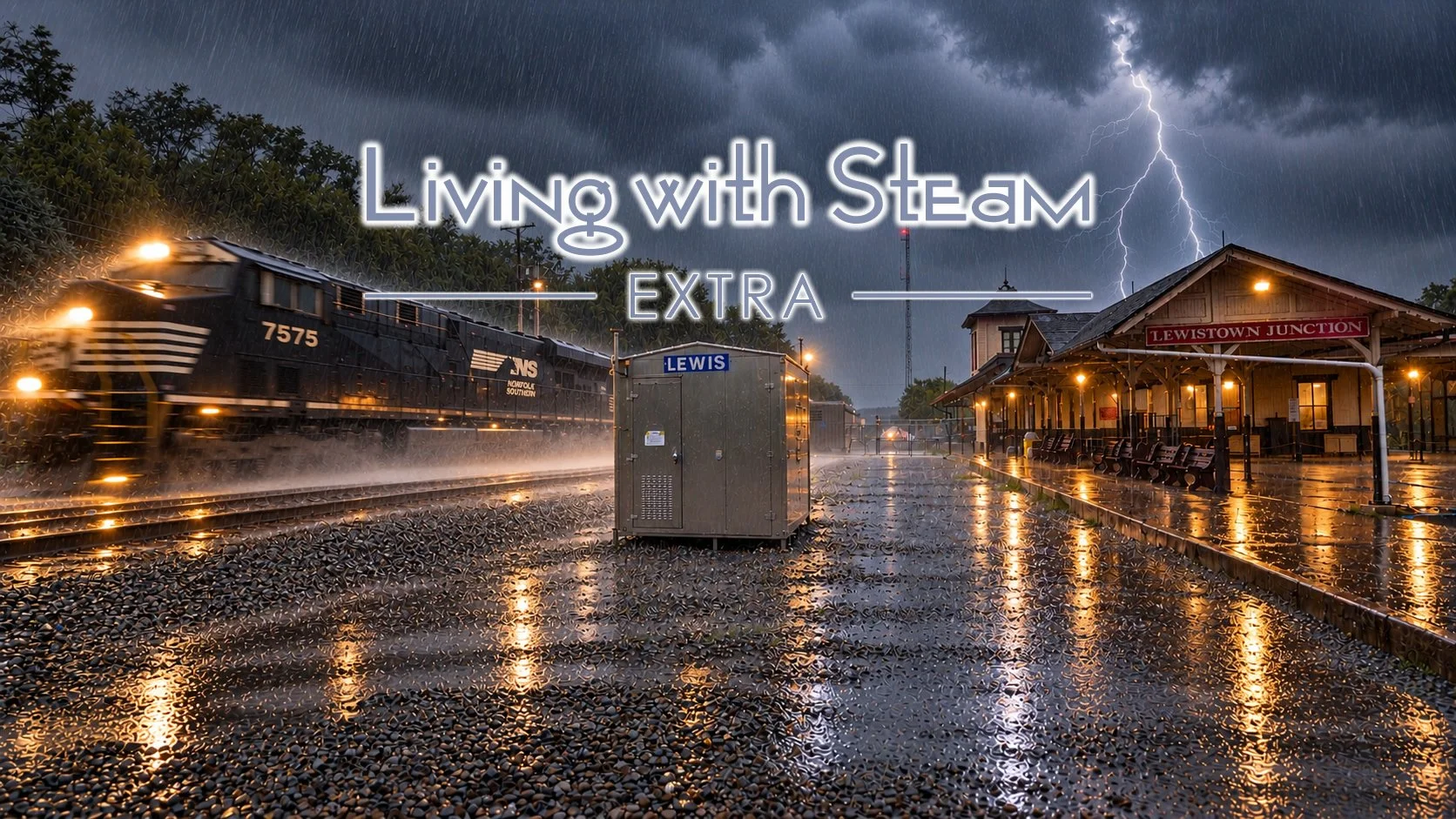
I’m going to point this out right away; the image above is completely AI-generated and that revelation has quite a bit to say about this episode of LwS EXTRA. In looking at the photo ChatGPT came up with, I wish I could say that back in July 2026 I was actually standing on the passenger platform of the Amtrak station at Lewistown, PA in the middle of a dark and somewhat violent thunderstorm… but I can’t. Allow me to explain.
As you’ve heard me say a few times on Living with Steam, I love the sounds of trains and thunderstorms. I like them individually, but nothing beats the aural experience of hearing both at the same time. In the neighborhood where I grew up, I had the New York Central (then Penn Central) Belt Line right up the street from my house. Whenever it rained, the sounds a train made as it ran on the tracks behind the houses parallel to the Belt Line tracks seemed to reverberate throughout the neighborhood. During the summer months when big storms were more frequent, whenever I had my bedroom windows opened, I don’t know what shook the house more; the trains or the thunder.
Even back then, whenever it rained, I stuck my portable cassette in front of an open window in my bedroom to try and capture the sound of the storm. Very rarely would I catch the storm as a train went by but it did happen.
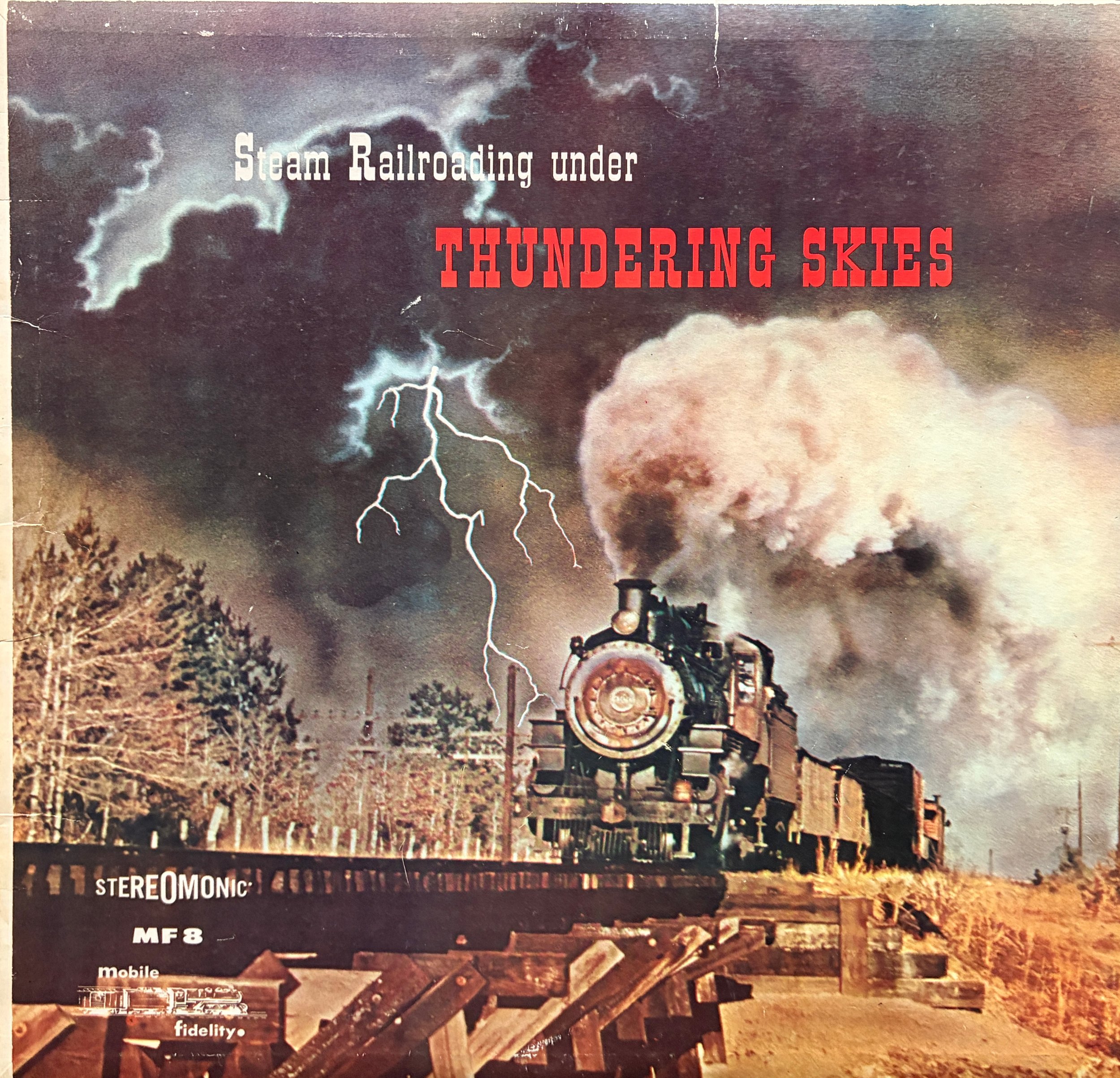
Between the mid-1950s and into the late 1970s, when dozens of nostalgic railroad sound recordings became available on vinyl records to fill that nostalgic longing for the sounds of steam engines pulling trains, two releases produced by Brad Miller, of Mobile Fidelity Records, were pretty much the only ones to feature trains in the rain.
The Back Story
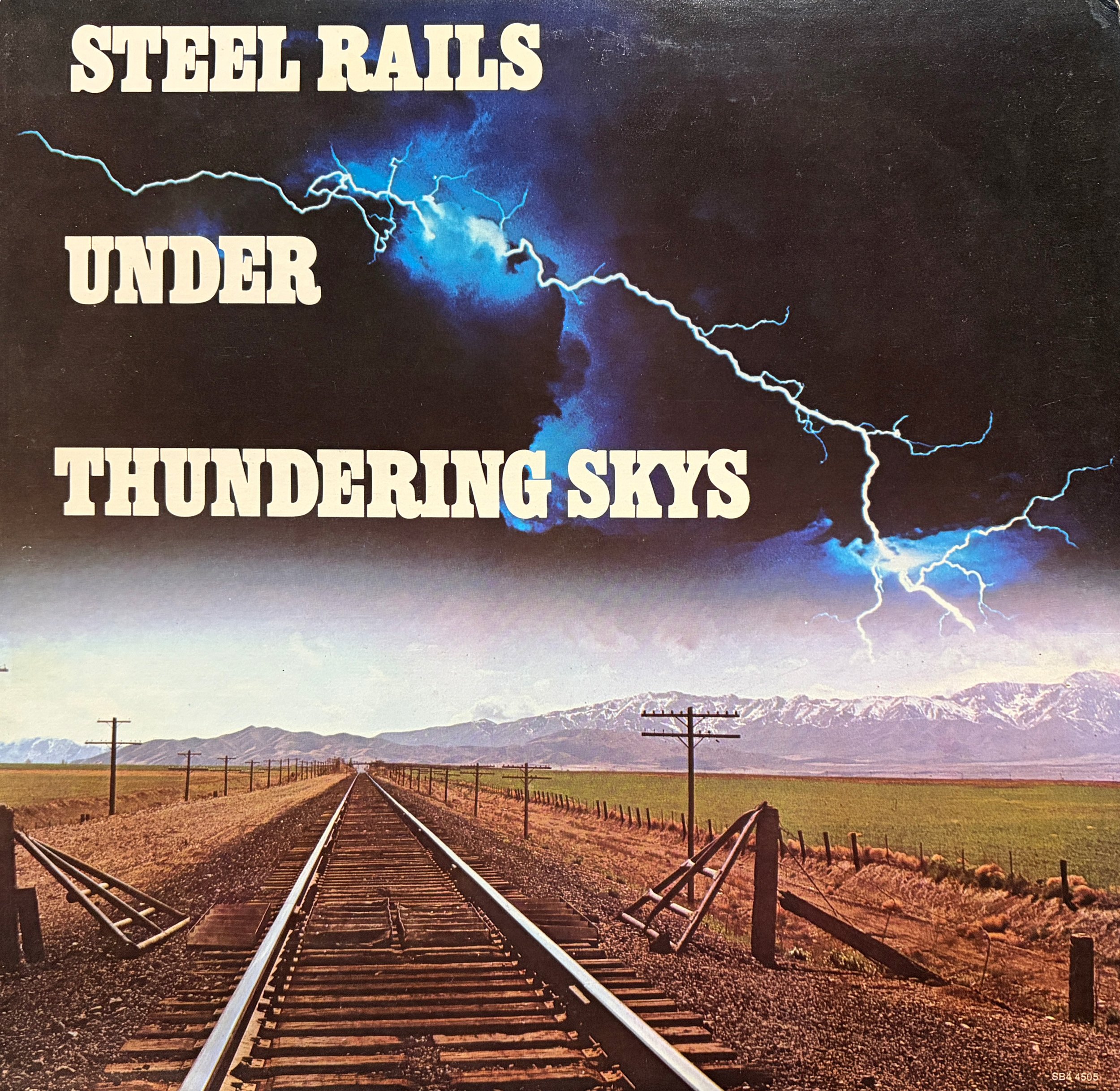
“Steam Railroading under Thundering Skies” was released in 1961 and is a good record. But it’s Miller’s classic “Steel Rails Under Thundering Skies” that gets the nod as one of the best recordings that features the sounds of steam engines passing what could be construed as a rural passenger station during a thunderstorm. Even though the original recording was made on analog tape, Miller was a very talented audio engineer and knew how to get the best fidelity out of the steam engines he recorded.
As you’ll hear from my commentary, it’s my opinion that it was impossible for Miller to capture the steam engine roster he features on “Steel Rails” at the EXACT location he wanted while there was a heavy thunderstorm taking place. Adding to the soundscape are the voices of engine crews and the sound of a ticking regulator clock in the background. You have no choice but to wonder how Miller pulled this off. I kept looking at the liner notes for the album and wondered the same thing. Well, it’s very simple… the entire recording was staged… or created in the studio. The purists out there will cry “FOUL”, but let’s think more about this.
Miller had been making recordings of steam engines on the west coast throughout the 1960s and had amassed quite a collection of archival material by the time he published “Steel Rails” in 1971. Using analog tape to make his recordings was by no means a handicap; that’s all that was available back then. But to make an elaborate soundscape, all he needed were a few additional tape machines and several tapes that would serve as “source material.”
One machine would play back train sounds, another machine played back a thunderstorm he probably recorded at another time, and a third machine would be used to record the master while the other two played back. Back in 1971, it’s more probable Miller employed a four-track tape recorder which would have given him the option of making a “sound-on-sound” recording of “Steel Rails’” master tape. In other words, record the trains to tracks 1 and 2, and the thunderstorm to tracks 3 and 4. He’d then play the four track master back to another tape deck in order to create a 2-track stereo master.
I know… this is getting way too technical for this write-up. But my point is to emphasize how relatively easy it would have been for Miller to create something as masterful as the “Steel Rails” album. This was not new technology at all. Even The Beatles had used early multi-track tape recorders to create the “Sgt. Peppers” album. The technique of using multiple tape recorders, or even multiple record cutters, to create soundscapes for radio programs or movies had been around for a long time. Even John Prophet could have pulled this off if he had access to another wire recorder, or a wire recorder and a tape recorder… which he did indeed own by 1955.
Regardless of how Miller recorded and assembled “Steel Rails Under Thundering Skies”, the subject matter and fidelity of the recording were so good that when the compact disc format came around in the mid to late 1980s, “Steel Rails” was released on CD and sounded better than the original vinyl release. The first time I heard “Steel Rails”, I thought it was something new that Miller had released. In fact, it wasn’t until I started producing Living with Stream and was able to see a list of albums containing railroad sound recordings John Prophet has in HIS collection that I discovered “Steel Rails” had originally been released back in 1971! John had a copy of it! What made the vinyl release more interesting was the fact it had been mastered for “Quadrophonic” stereo system.
“Steel Rails Under Thundering Skies” has held up so perfectly that one can stream it on Spotify and other platforms. You really should check it out if you’ve never heard the recording.
So, what’s the story with that “AI-generated” image at the beginning of this text and what does it have to do with Brad Miller, John Prophet, and Lewistown, PA?
Back in July 2026, my wife and I were guests at the Pennsylvania Railroad Technical & Historical Society’s archives in Lewistown, PA; housed in the former PRR Lewistown passenger station. Since John was a co-founder of this great organization, the PRRT&HS had some documents, photos, and other items from John’s collection I wanted to look at to assist with some upcoming episodes of Living with Steam.
Honestly, I had another big reason for wanting to visit Lewistown… and that was to finally have the chance to follow in John’s footsteps and make recordings of trains from one of the locations he visited. Lewistown offered me unlimited access to the building and three days to accomplish my goal. In other words, I wouldn’t be driving around Pennsylvania like a nomad, pulling up to a location that looked promising, then sitting there for 12 hours holding a microphone in my hand waiting for trains to come by. From a technical standpoint, Lewistown was a “set it and forget it” location, and was the best possible place for me to make my own recordings, experience exactly how John operated when he made his recordings beginning in 1948, all while doing research in the archives. It was the best possible scenario.
Well… sort of.
The John Prophet Tie-In
John visited Lewistown often, but in 1978 he took three of the pictures shown below. Back then, the building had fallen into a serious state of neglect. It looked nothing like it did when it first opened in 1848 as a freight station and later enlarged in 1868 to include a passenger station, which you can see in the bottom right photo below. John’s photos show the former beautifully ornate structure looking more like a run-down shack.
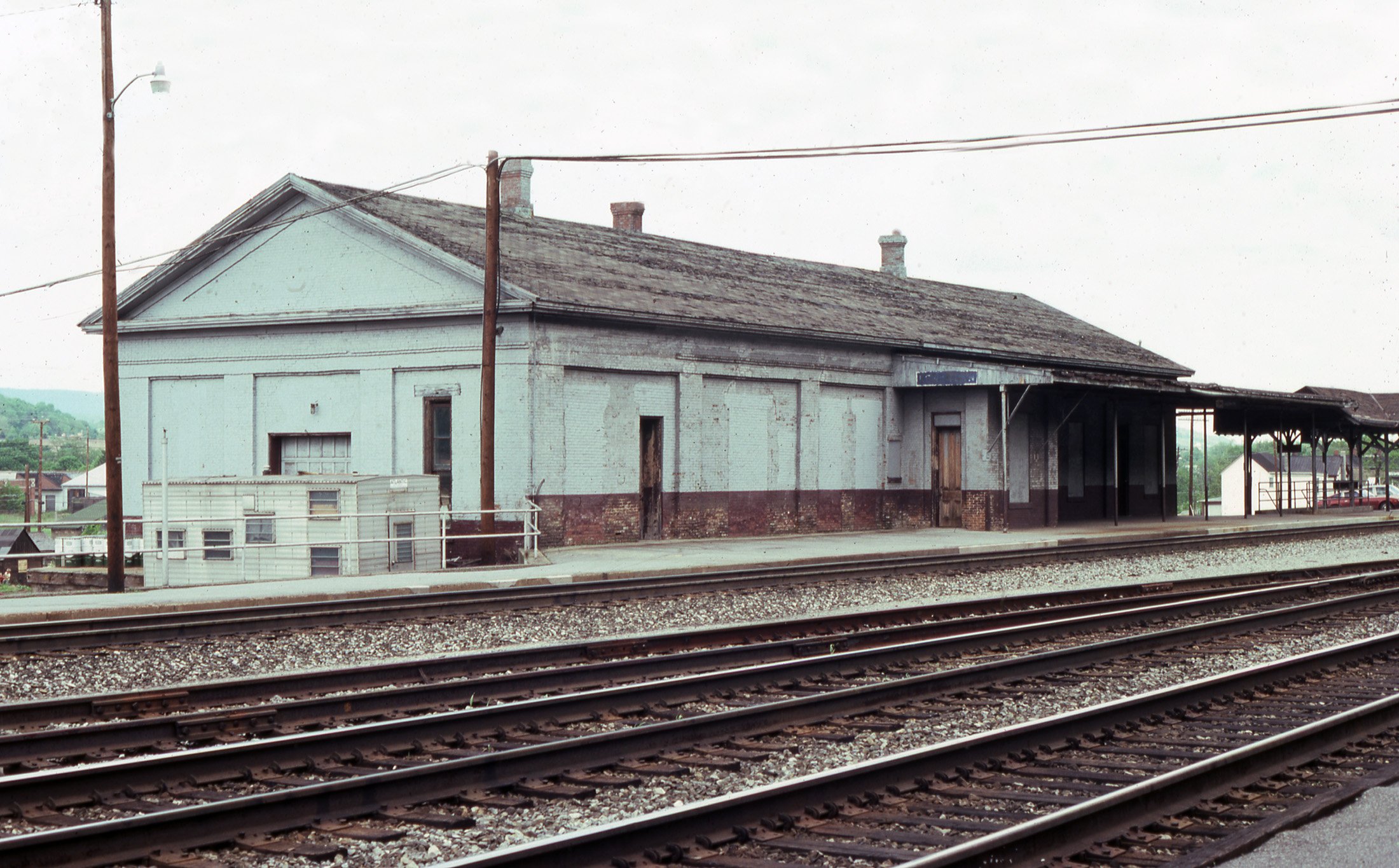
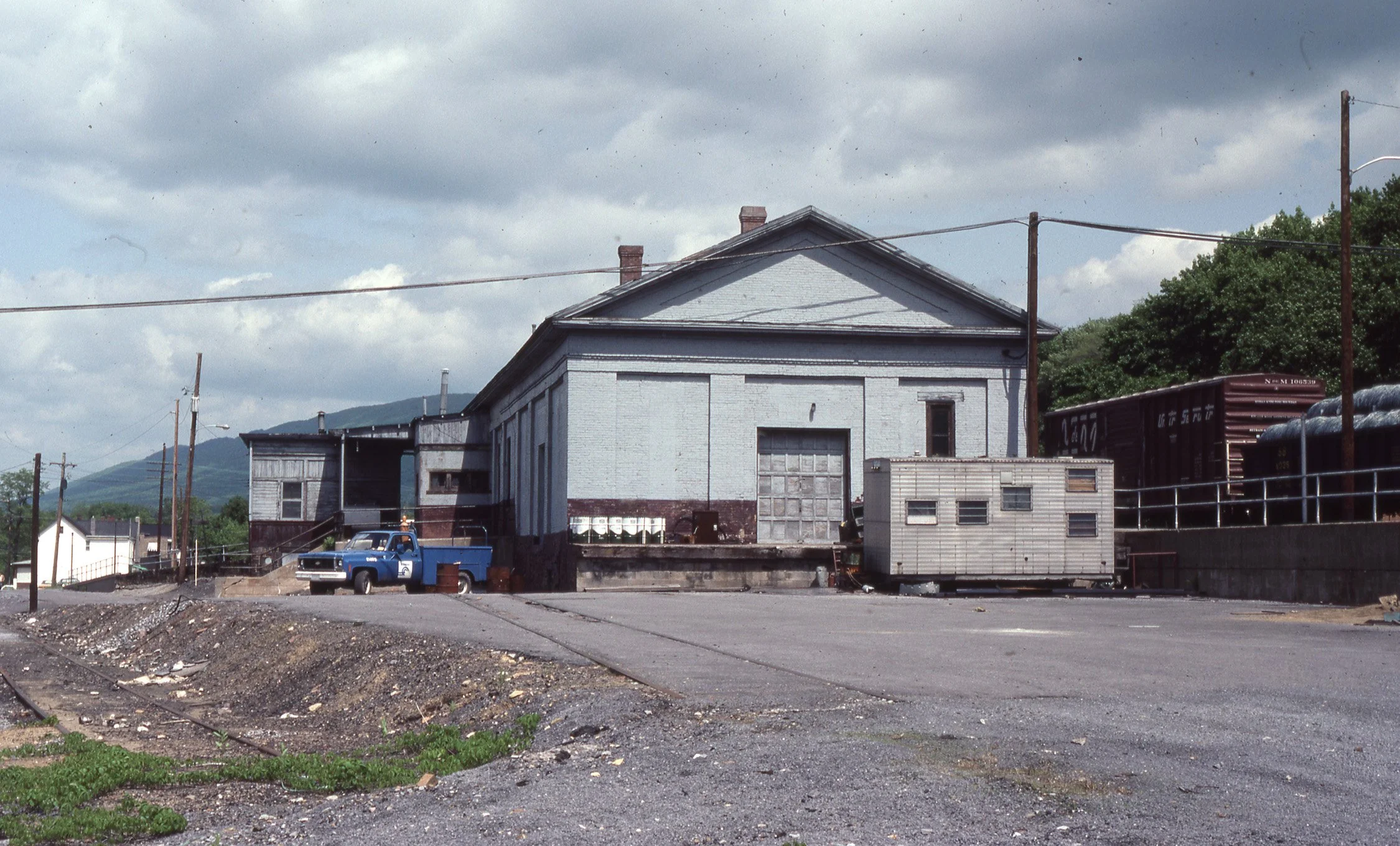
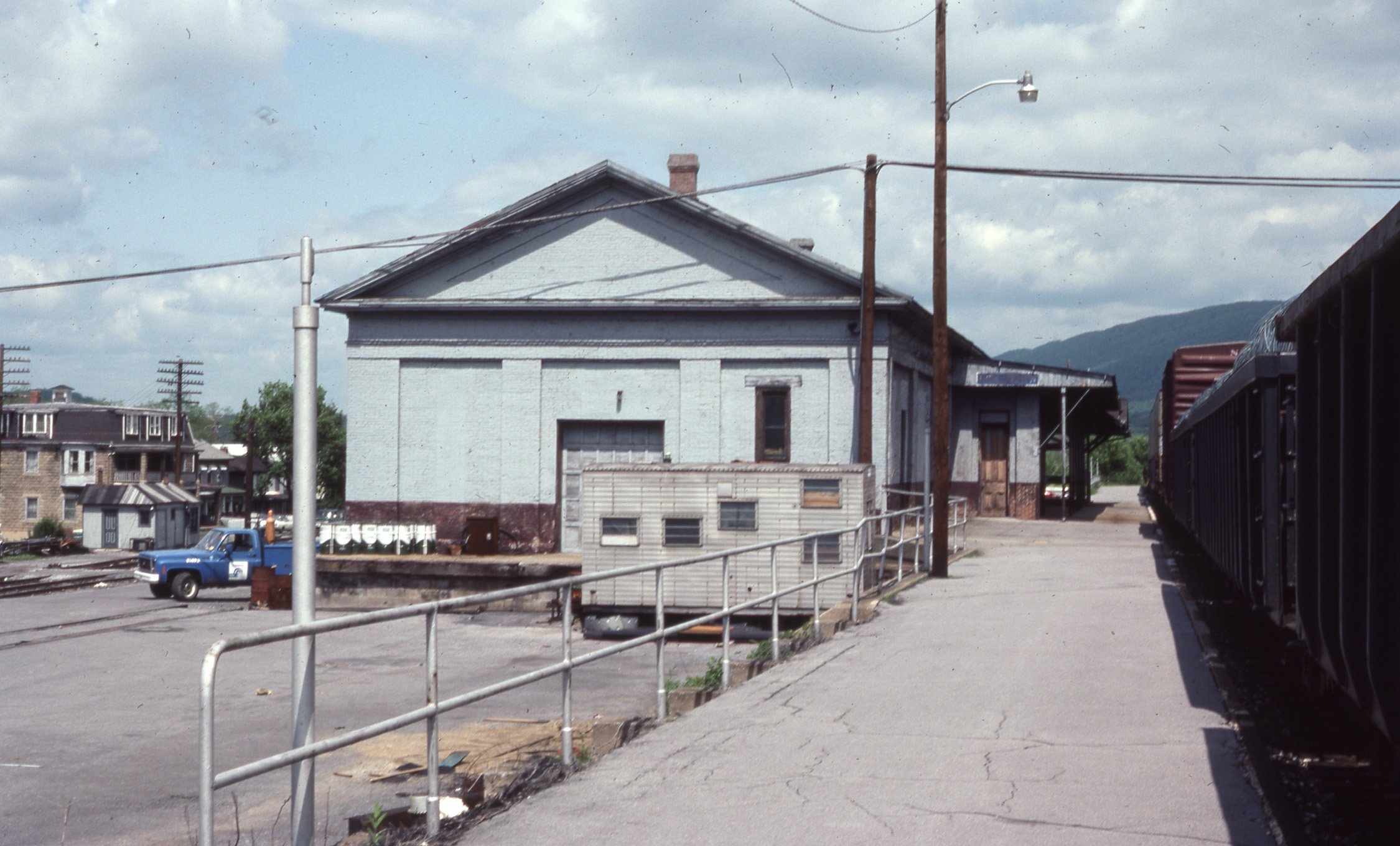
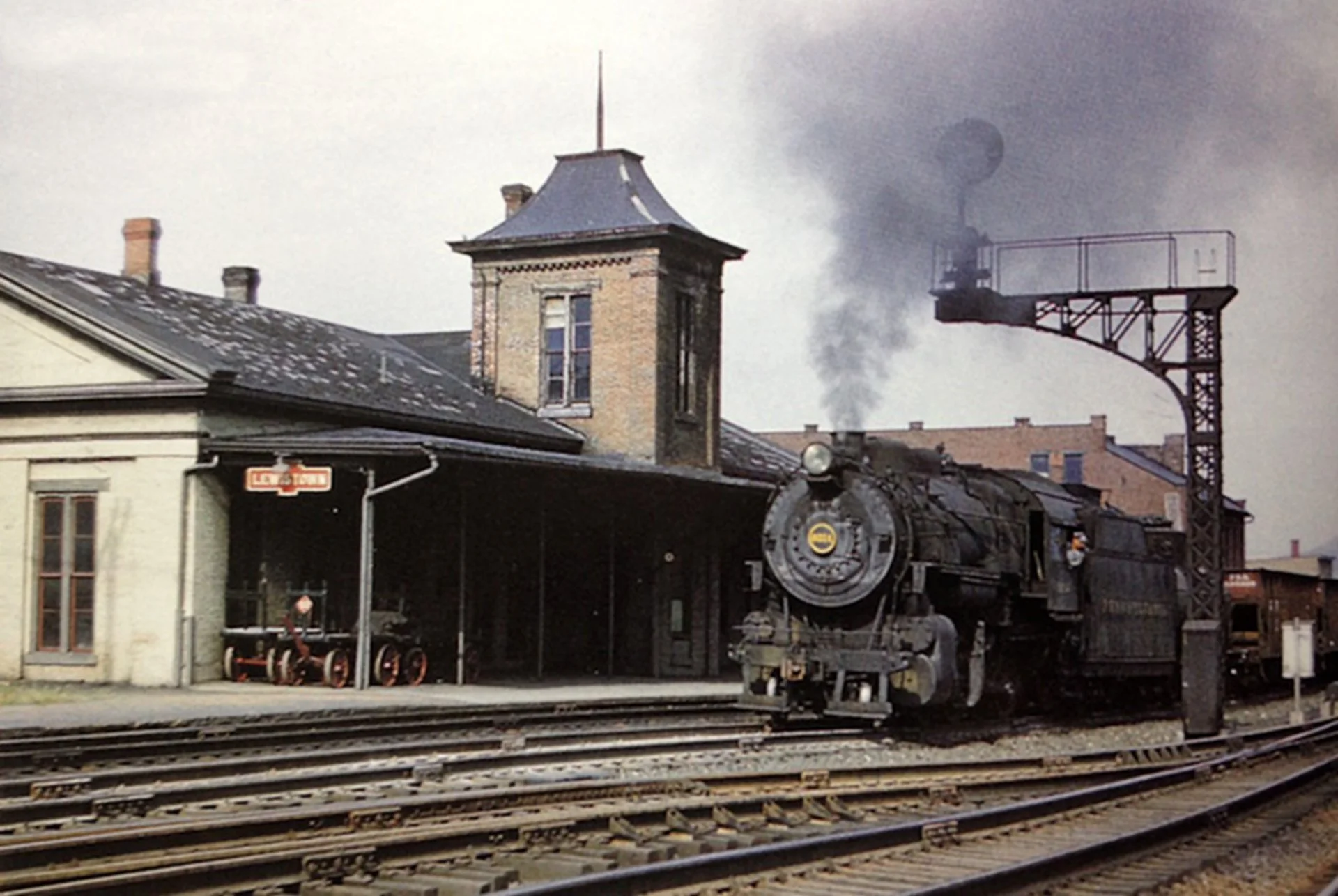
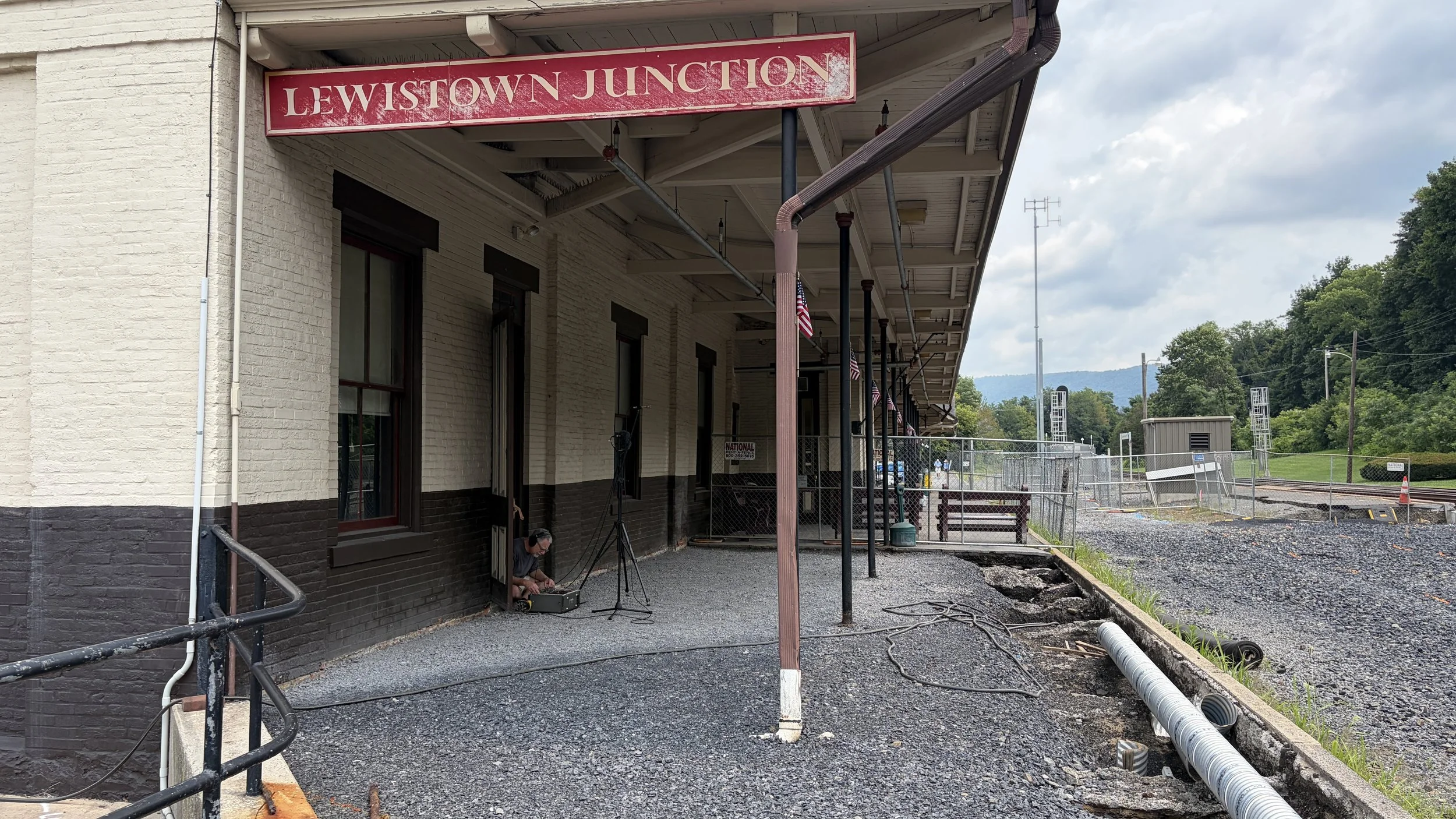
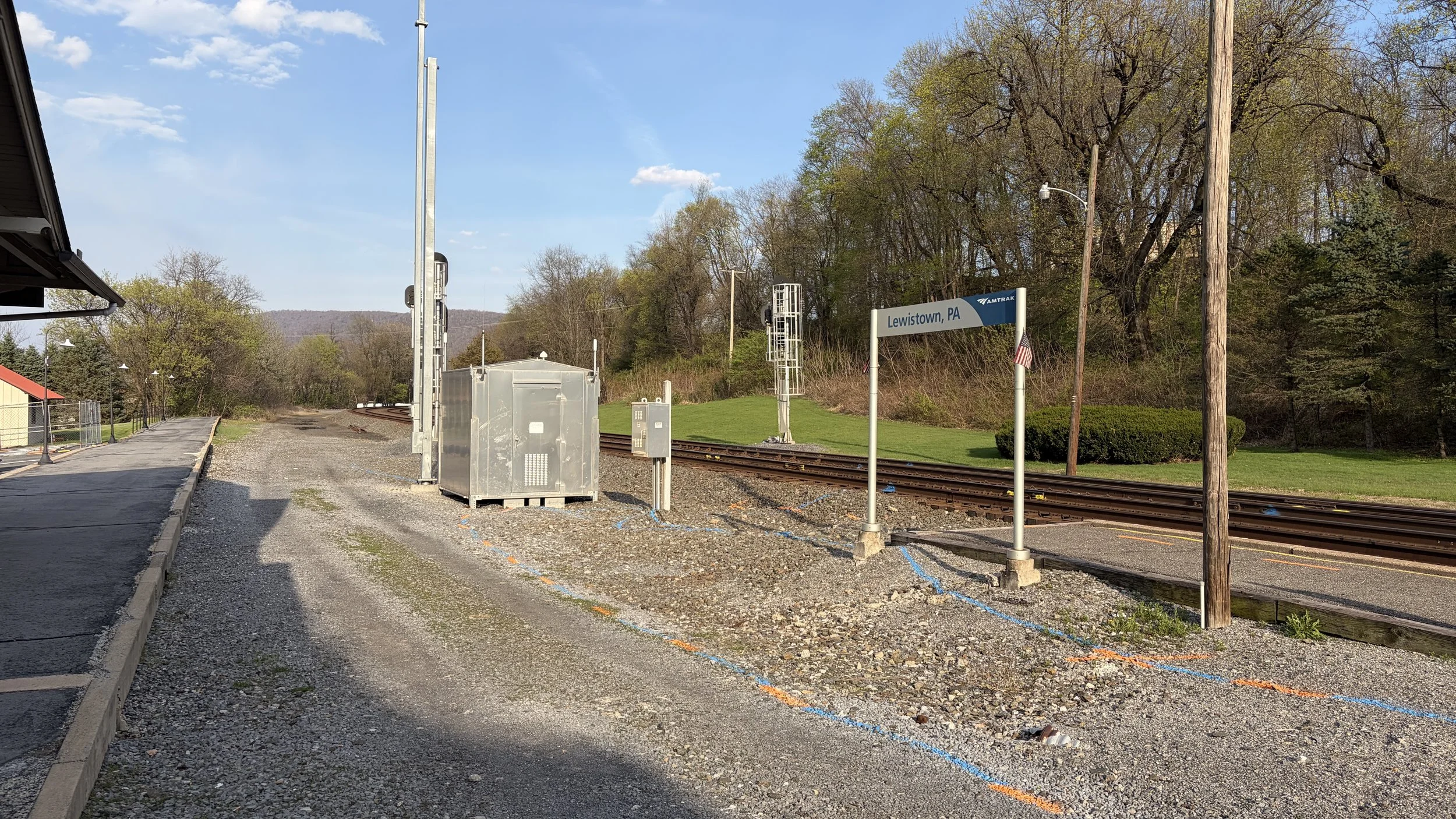
Below is how the Lewistown station looks today. In addition to being the home of the PRRT&HS’s archives, a small section of the building is used as an Amtrak station which sees two trains daily; Train 42 – Eastbound: Pittsburgh to New York City, via Harrisburg and Philadelphia, and Train 43 – Westbound: New York City to Pittsburgh, via Philadelphia and Harrisburg. Train 42 is scheduled to arrive at the station around 11:30 every morning while train 43 arrives around 3:45… IF either is running on time.
The images below were taken of Amtrak Train 43 heading west.
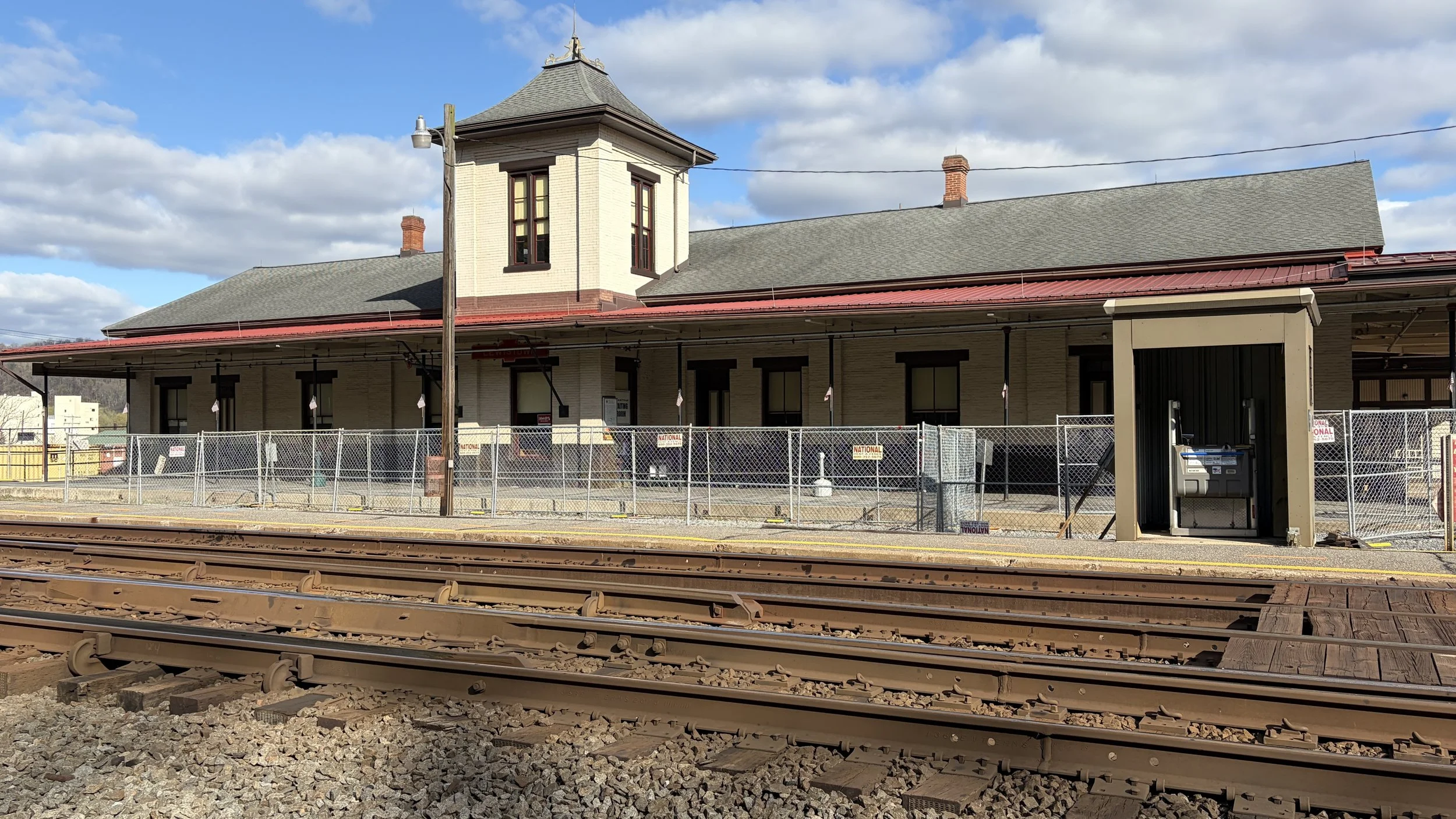
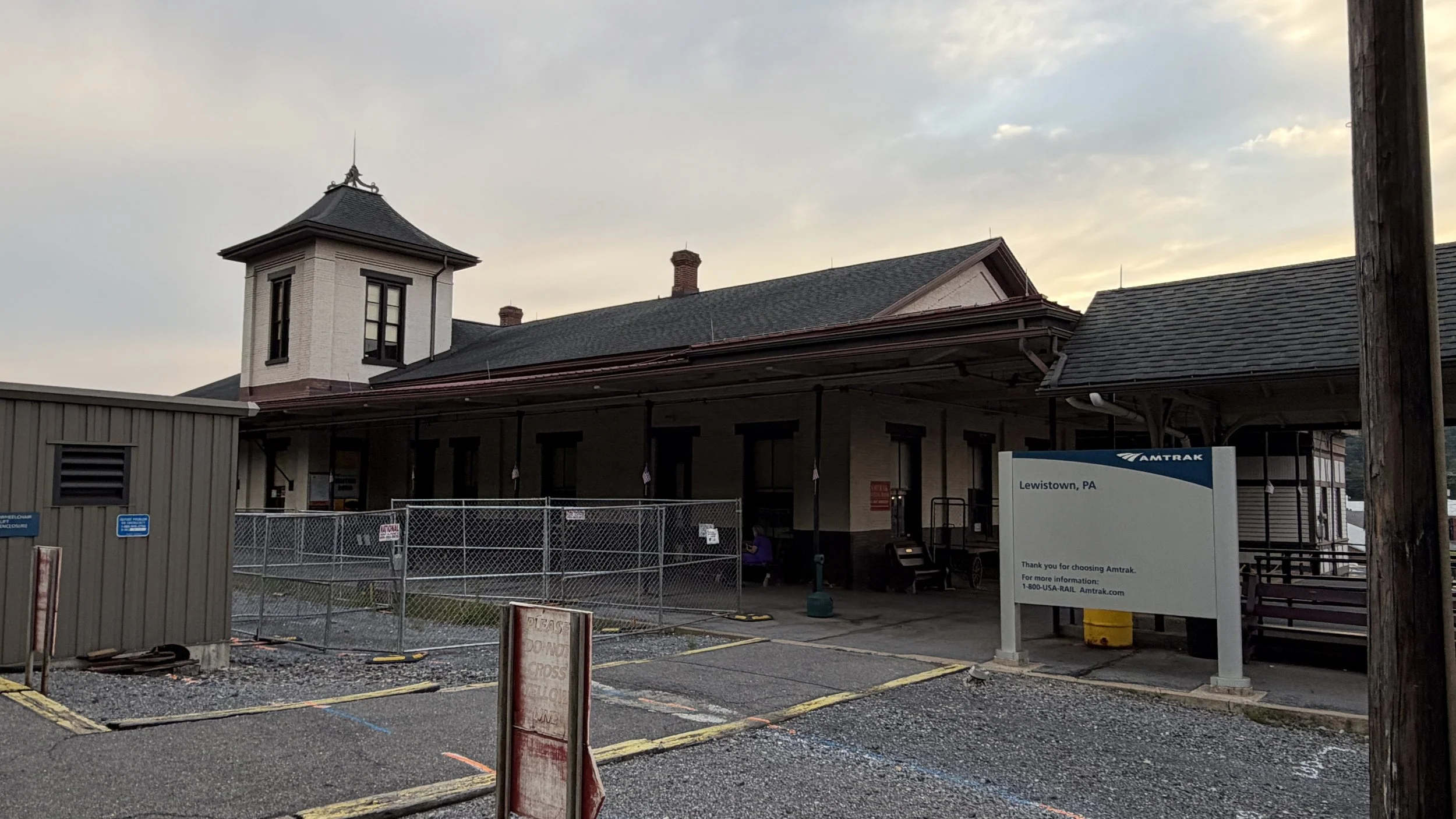
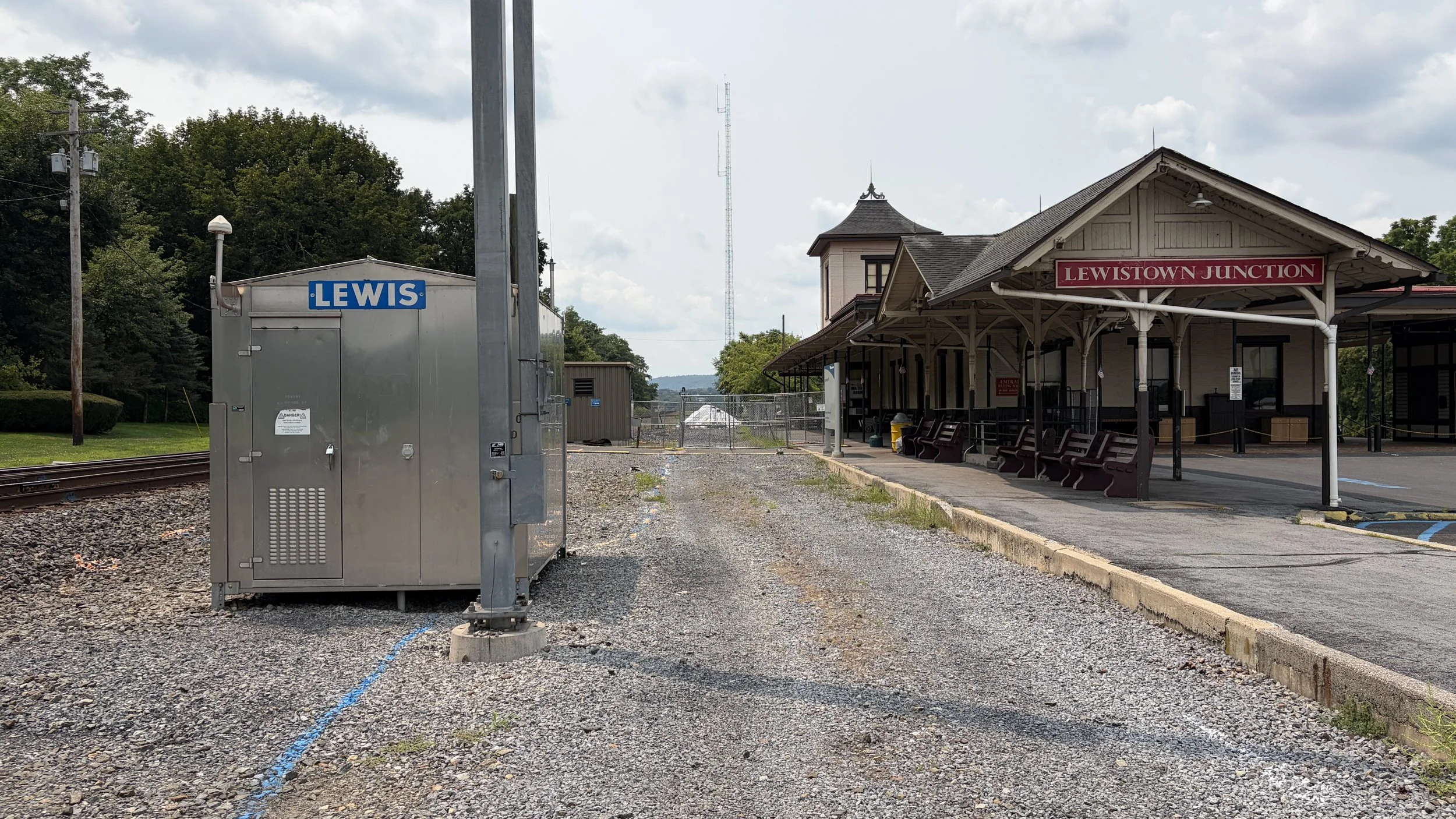
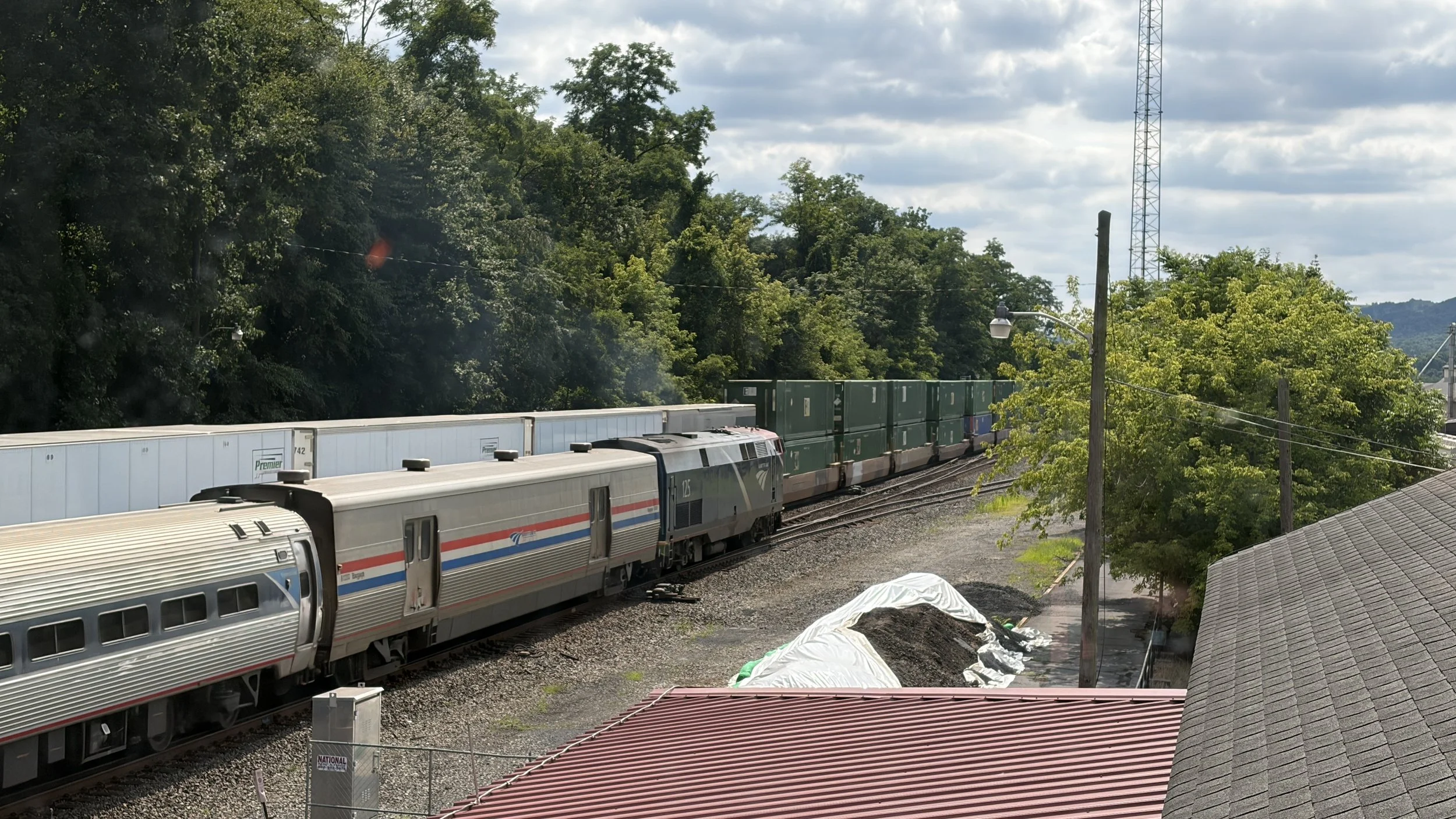
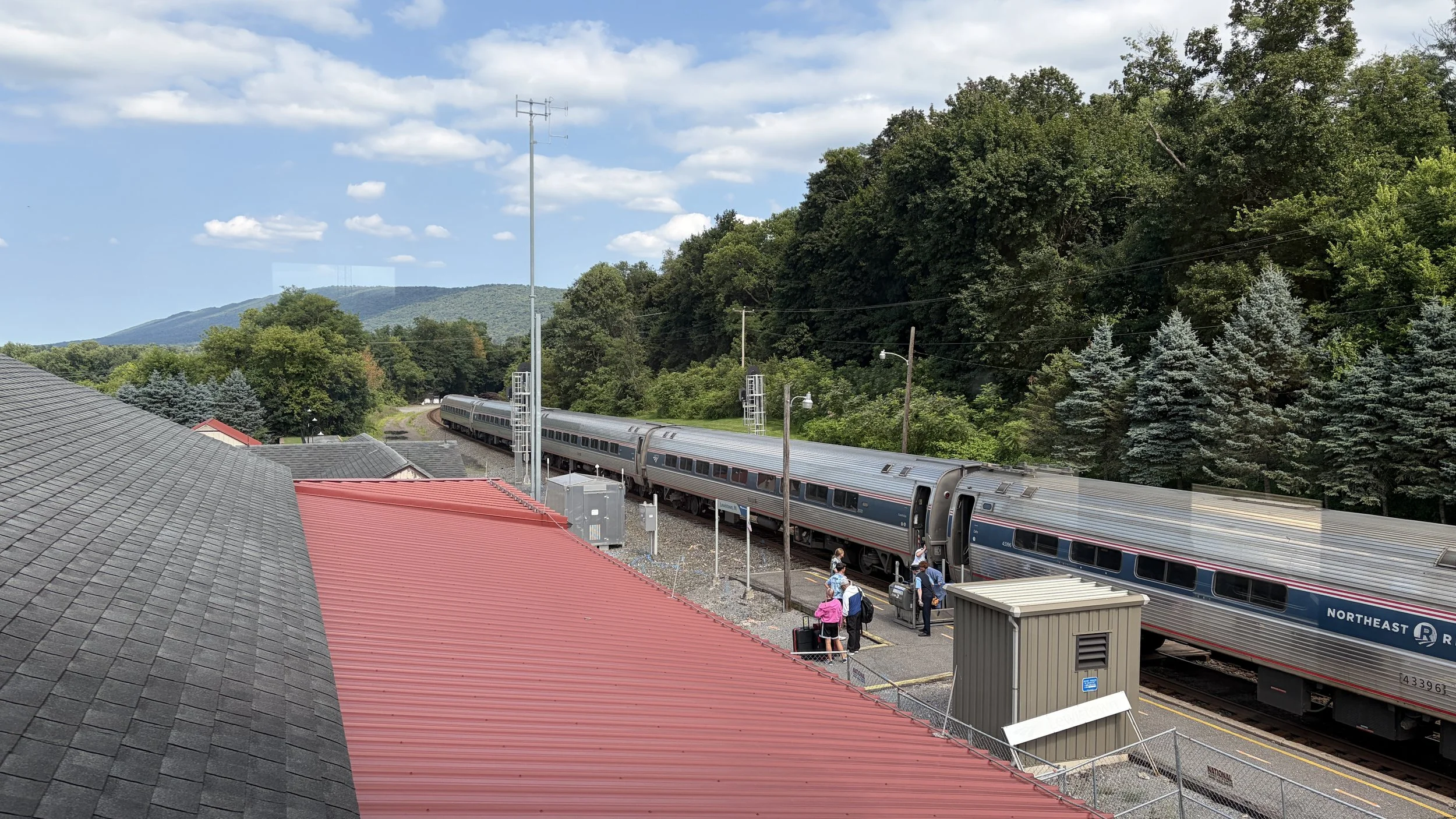
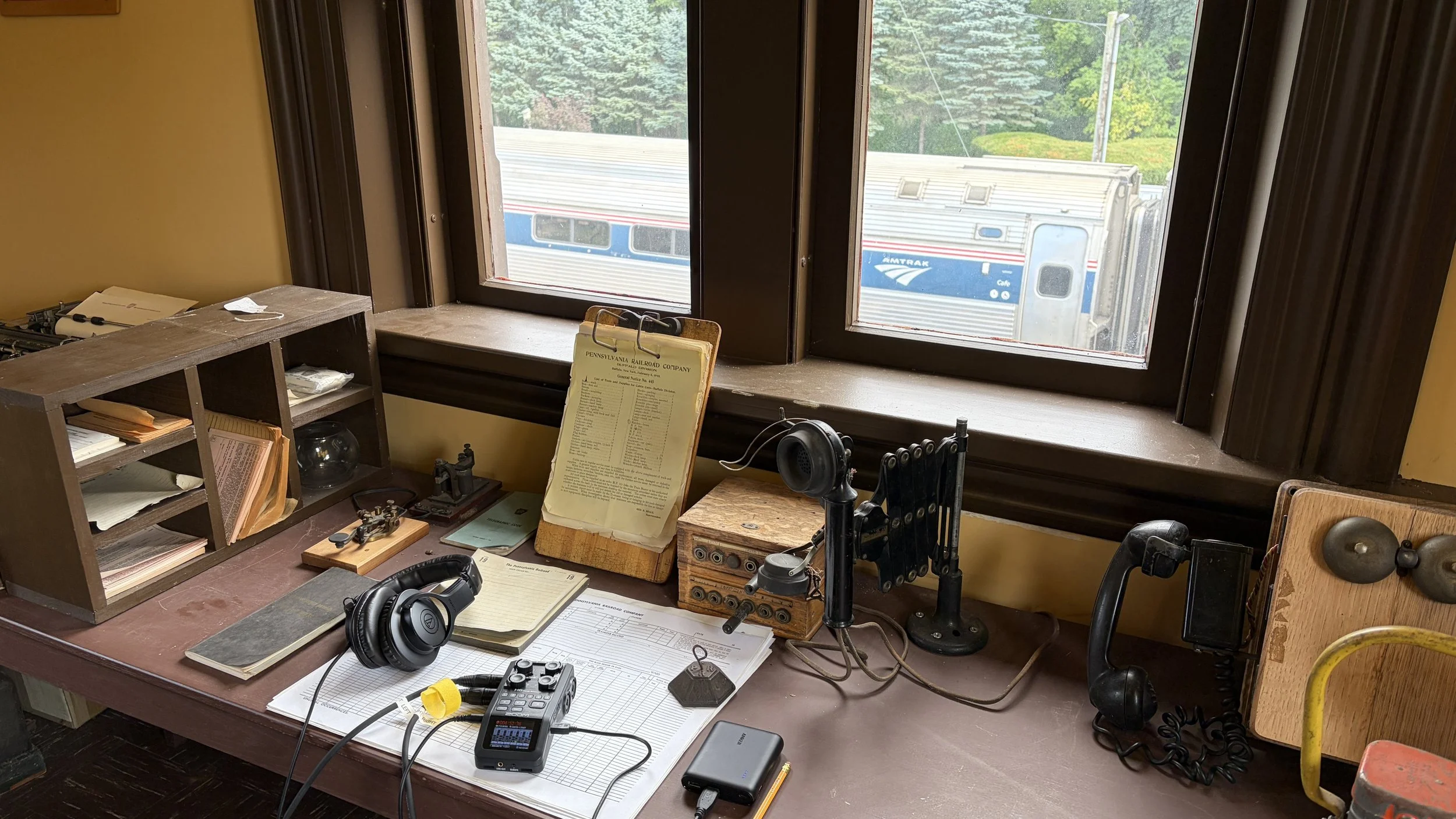
Lewistown was one of the places John often visited whenever he was in this area of Pennsylvania to make additional stops at Huntingdon, Tyrone, Altoona, Horseshoe Curve and Cresson. Although John took a number of photos in Lewistown, he never made a recording there.
One of the reasons John was drawn to a place like Lewistown (or Tyrone) was because it was situated on Pennsy’s 4-track Middle Division main line. Back in 1948, when John first started making his recordings, steam engines pulled all of the trains. The passenger traffic was heavy, but the freight train activity was about as non-stop as it is today even though the line is now operated by Norfolk Southern. A location like Lewistown was perfect because there was a covered passenger platform and an indoor waiting room with a station agent that could assist John in powering his wire recorder if needed. If it started raining, John could remain outside and stay relatively dry.
You’ll notice earlier I said John took the photos at Lewistown in 1978. By then, the Pennsy was long gone, and even Penn Central was beginning to fade into memory. John was so desperate to hang on to any form of railroad activity in the areas in Pennsylvania he was so fond of that he resolved to take pictures of anything that related to the Pennsy; even if the only train activity was provided by Conrail.
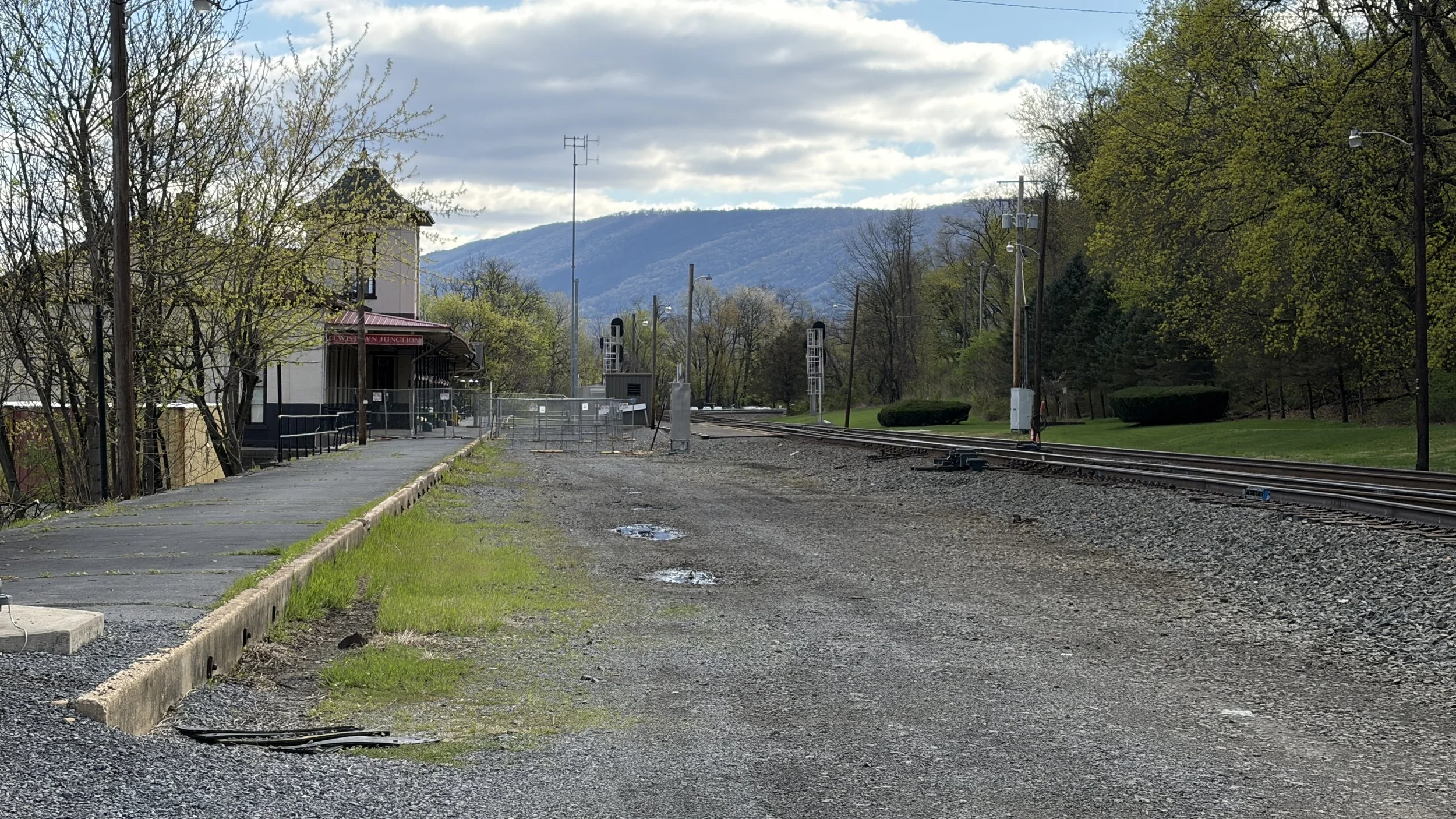
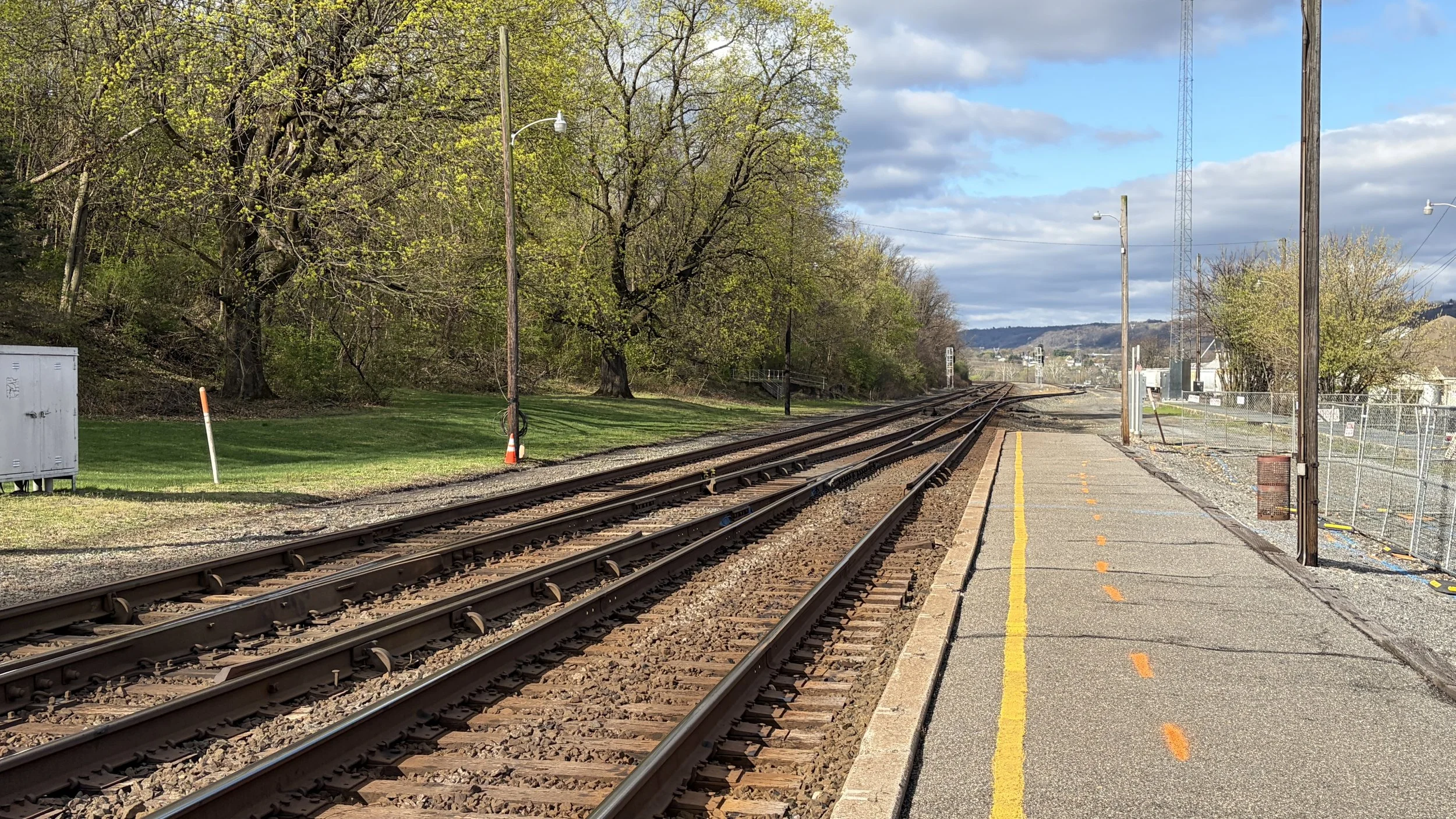
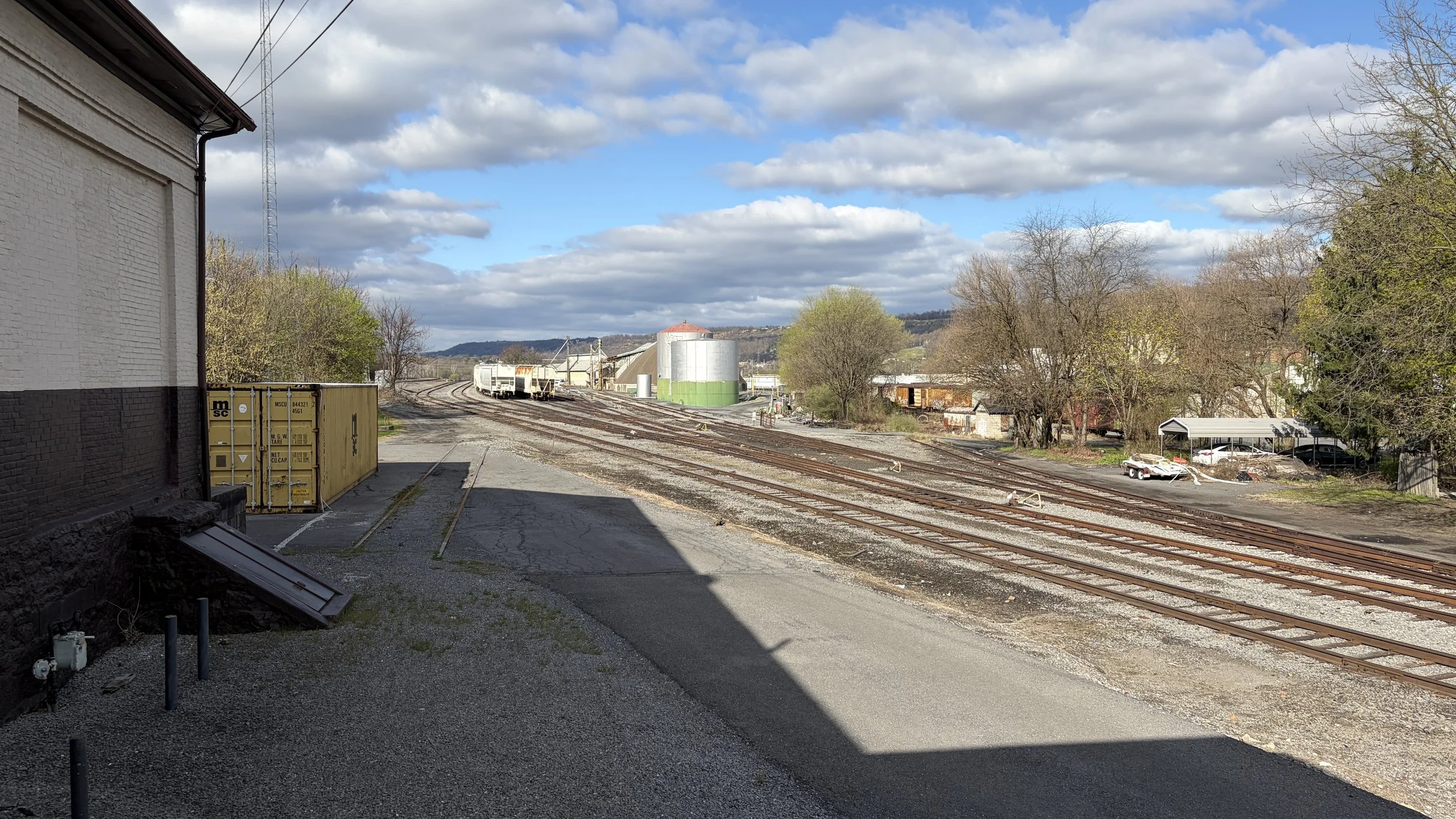
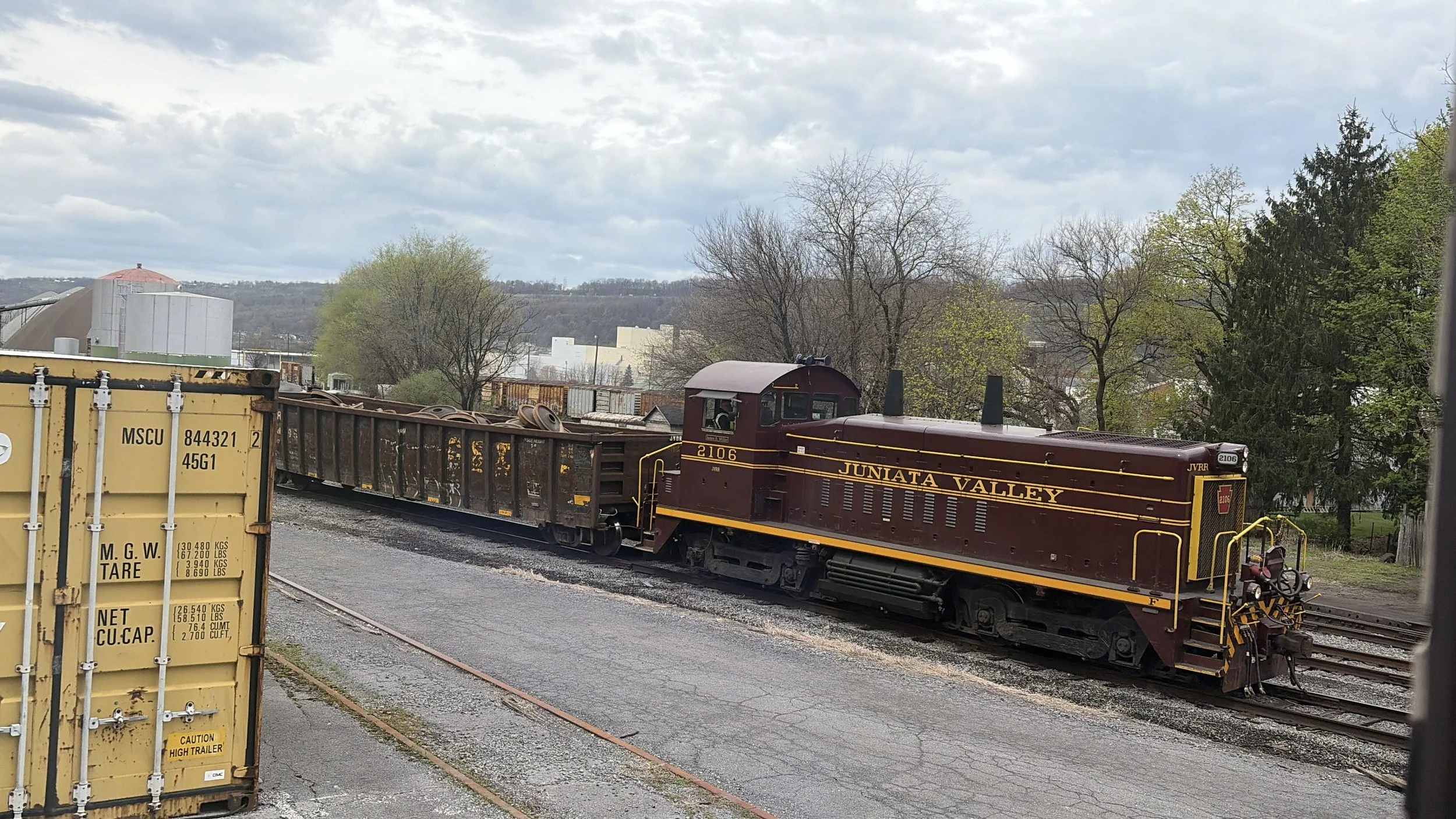
Compare the tracks in front of the station in John’s photos to the ones in the photos I took in 2026. The photo on the left shows the NS tracks right in front looking east, the middle photo is a view from the passenger platform looking west, while the right photo shows the tracks and yard behind the station; now used by the Juniata Valley Railroad.
The “Why” of It
Let’s now get to this very unique episode of LwS EXTRA and how/why it was made. As I said, I LOVE the sound of trains in the rain; preferable rain with thunder. Since I had resolved myself to the fact I was going to make recordings from Lewistown, I had to bring a lot of recording equipment with me.
John only brought his wire recorder with its included microphone, a power converter and connecting cables, and a small stool to put everything on. I brought enough gear to record a small event. If the station was going to play host to something like the “Lewistown Jazz Festival”, I’d be able to record it. I don’t think there is such a thing as the “Lewistown Jazz Festival”, but if one suddenly popped up on that particular weekend in July, I was ready.
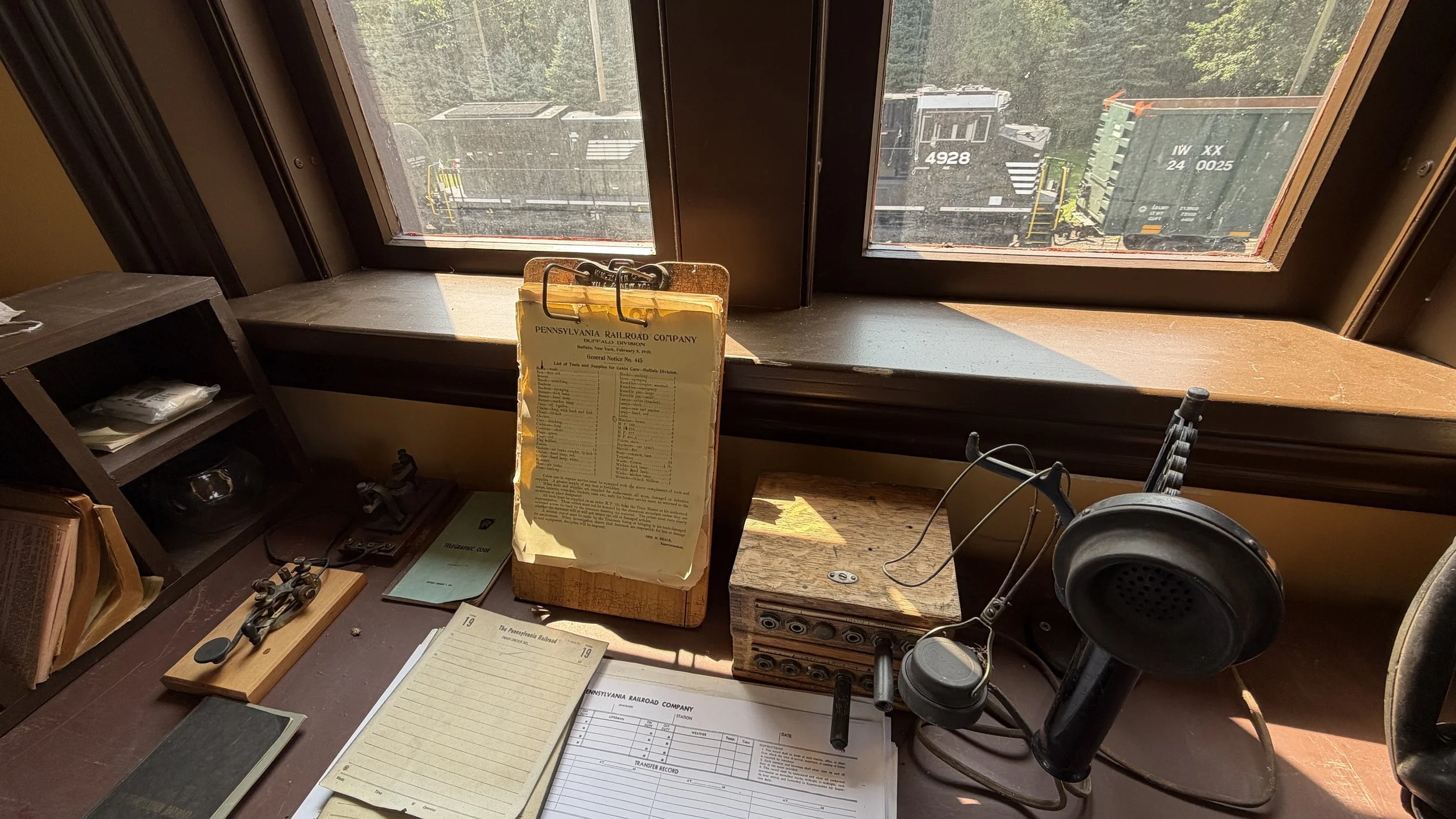
I placed microphones in the station’s tower (pointing out the windows), and several more mics directly on the passenger platform about 30 feet from the tracks even though Amtrak was in the middle of the reconstruction of the platforms and had a fence surrounding their work area. I intended to record as much activity as I could while my wife and I were doing our research. With that many mics, I wanted to capture the sound from all over the exterior of the building. I had two Zoom digital recorders on hand and I even got my phone into the act.
Now, to be sure I wasn’t completely oblivious to how John, or even Brad Miller, did things back in the day, I also brought set up my recently restored Ampex 960 stereo tape recorder. But rather than making any recordings in stereo, I elected to connect an older Electro-Voice mic to the 960 and record in good ol’ mono… just like John did.
Believe me when I say using the 960 was NOT EASY. Since I was recording at 7-1/2 ips, I had to change out the 7” tapes I was using every 20-30 minutes. In order to monitor what I was recording, the unit has a single audio input meter even if you’re recording in stereo. However, it wasn’t moving a bit while recording normal ambient sounds like birds and other things. I had headphones on, but what I was hearing was next to nothing. If I set the input levels in order to get a good recording of nature’s ambience, when a train finally came along, the sound of it overloaded the input to the 960 and made the recordings horribly distorted! If recording on the 960 was the only thing I was doing while at Lewistown, I could have sat in front of the machine and monitored every minute of the recording process as John or Brad Miller did, but I really didn’t have the time to babysit it like that.
Although the 6 tapes I eventually used to make the analog recordings from Lewistown turned out fine, there is no comparison to what the digital recorders captured. By setting a “limiter” on the input for each mic, if a train came by that was sure to overpower the input, the limiter would immediately catch the excessive audio loudness and back it off automatically in a way that didn’t sound like I grabbed the audio input knob on John’s wire recorder and abruptly turned in counter-clockwise. Many of John’s recordings suffer from this “holy crap that’s loud” moment.
The image below shows me sitting at the controls of the Ampex 960 trying to set an input level as an NS freight train approaches from the west… which is behind my wife… who’s taking the photo.
Here’s where things got promising and gave me hope I was going to actually pull this recording off in the spirit of “Steel Rails Under Thundering Skies”. One of the days we were going to be in Lewistown had rain in the forecast; a 65% chance of a thunderstorm! The beautiful thing about recording in the digital medium is that you can simply set up the microphones, load a 1 tb SD card into the recorder, start the thing up and forget about it; which I did… for 14 hours a day during the three days we were there. By turning the recorders on and simply letting them record anything and everything that took place outside the station, I was bound to record SOMETHING especially if the rain started and I found myself too busy looking at photographs or maps to notice right away.
As it turned out, even though the sky starting looking ominous by the middle of the afternoon, it never rained once. Every day was hot and somewhat humid. I think we got the moisture equivalent to perspiration, but it certainly wasn’t rain. To me, this was very disappointing because I knew I wouldn’t get another chance to make an honest-to-goodness soundscape of trains in the rain on this trip. I had actually checked the weather forecast from home PRIOR to leaving for Lewistown, and on Sunday, RAIN was there! When have weather forecasters ever been wrong?!
The bottom line; if I wanted a soundscape “a-la Brad Miller” of trains in a thunderstorm, I was going to have to make my own. Luckily, I had more than 42 hours of recordings I made at Lewistown Station. I simply had to wait until I got back to my studio to try and create something that included the many thunderstorms I had recorded at home over the past five years.
About the Recording
First, let me say that out of the 42 hours of recordings I made, I compiled one of the best sections down to 1 hour and 32 minutes. So, the train sequences you’ll hear in the episode are in REAL TIME. This is 1:32:00 of continuous activity at Lewistown Station with a few embellishments tossed in to make parts of the recording more interesting.
For example, the Juniata Valley Railroad passed by on the opposite side of the station on a completely different day, but it sounded so incredible when heard from my microphone’s vantage points that I put the sequence into this recording.
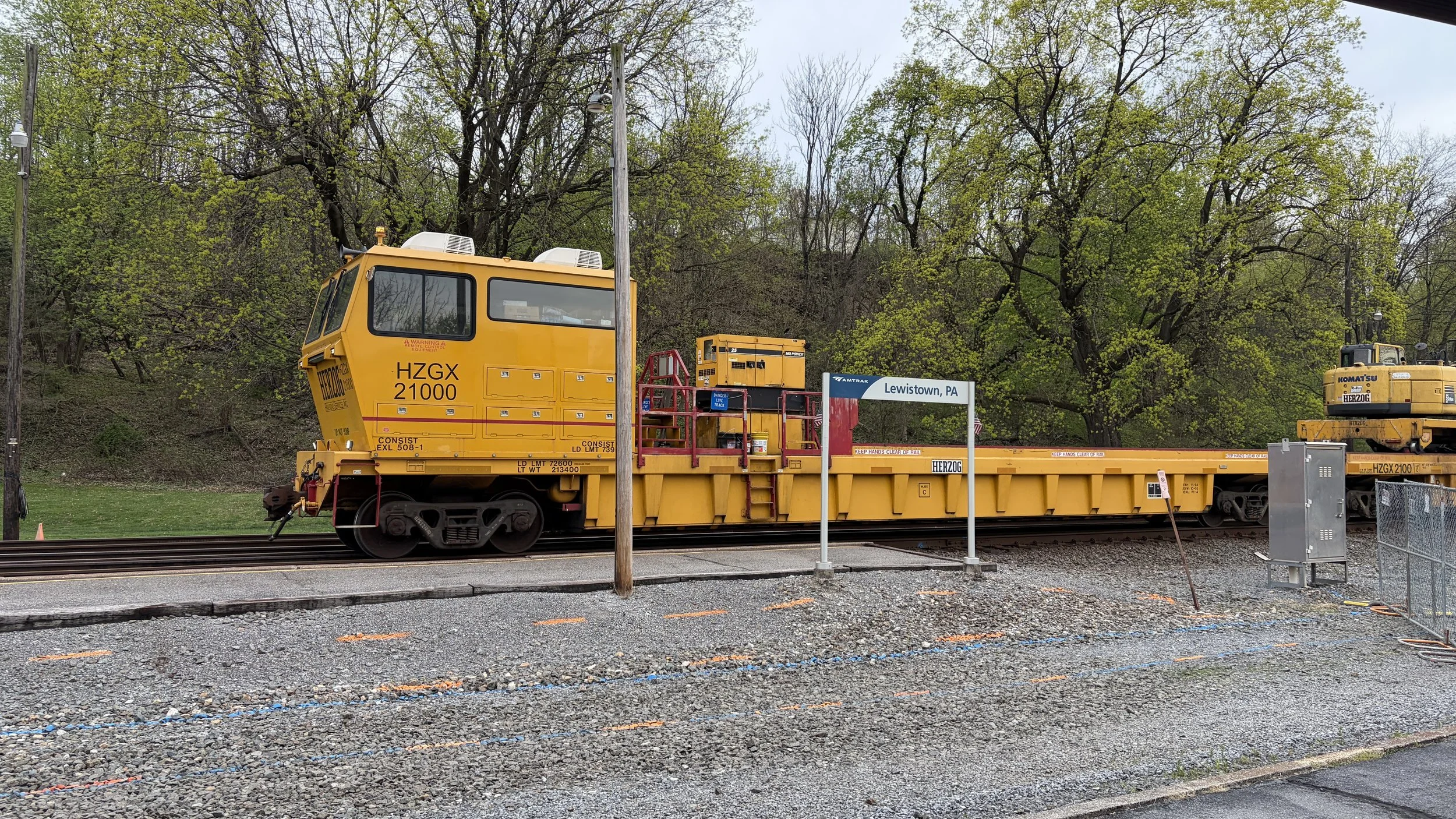
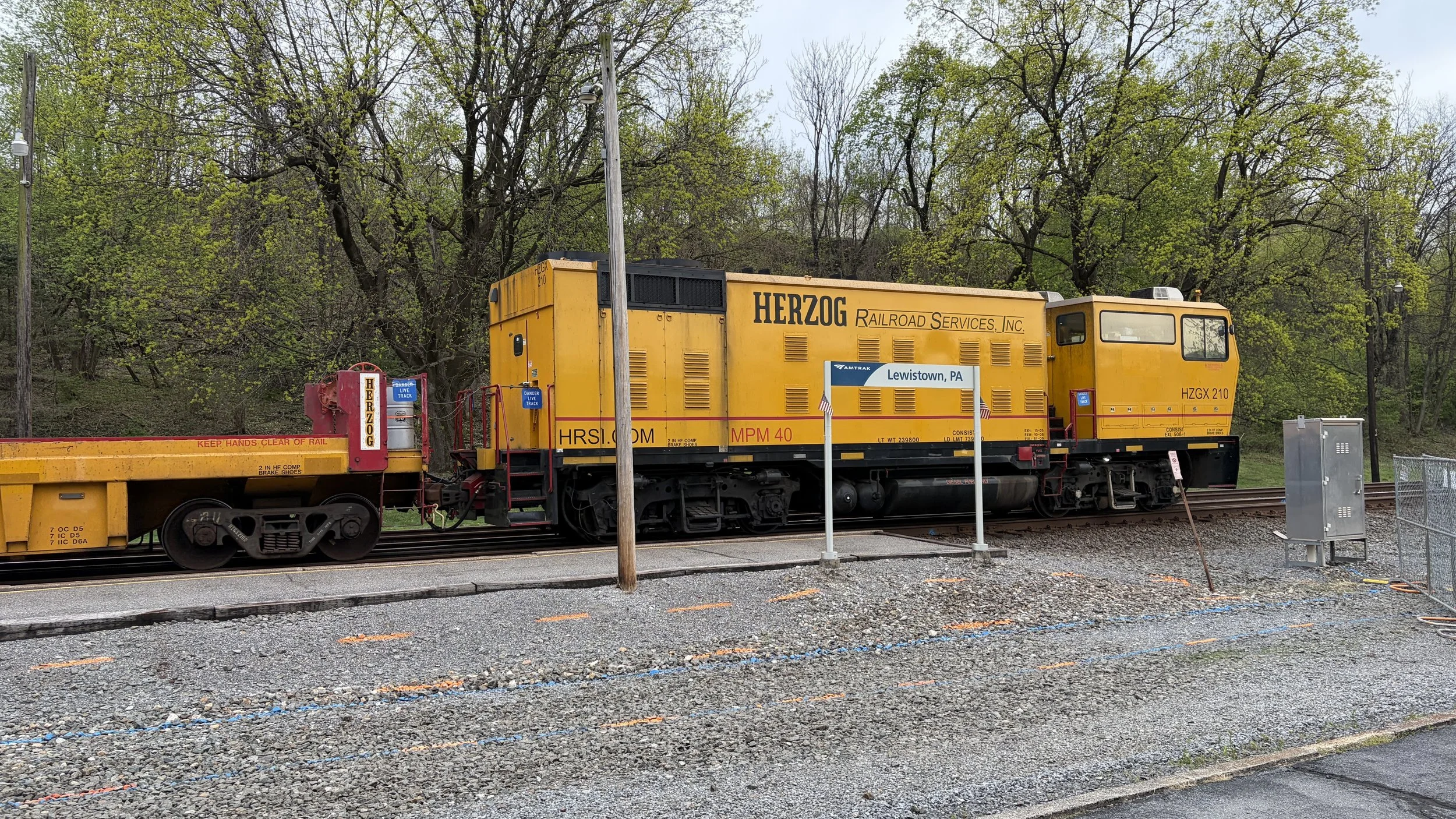
At one point, a Herzog MPM (Multi-Purpose Machine), which is a specialized self-propelled maintenance machine used with work trains for handling track materials and performing various right-of-way/track-maintenance jobs, went by the station as it approached very slowly from the west. It stopped just up the tracks from the station and waited for an NS train to pass. Once that happened, the Herzog crossed over to the opposite track and went back the way it came just as slowly as it had done earlier.
Below are images of the Herzog and the Juniata Valley local freight train.
I should also mention that it’s a 2-track mainline on this section of NS tracks, but a train can cross over to the other by way of a switch. I assume that one of the “frogs” on this switch must be raised slightly so anytime an NS train approached from the east running at 60 mph, the engine and car’s wheels would hit this frog and cause an extremely loud metallic BANG that’s incredibly overpowering especially if you’re standing right by the tracks. This “bang” can be clearly heard in the recording.
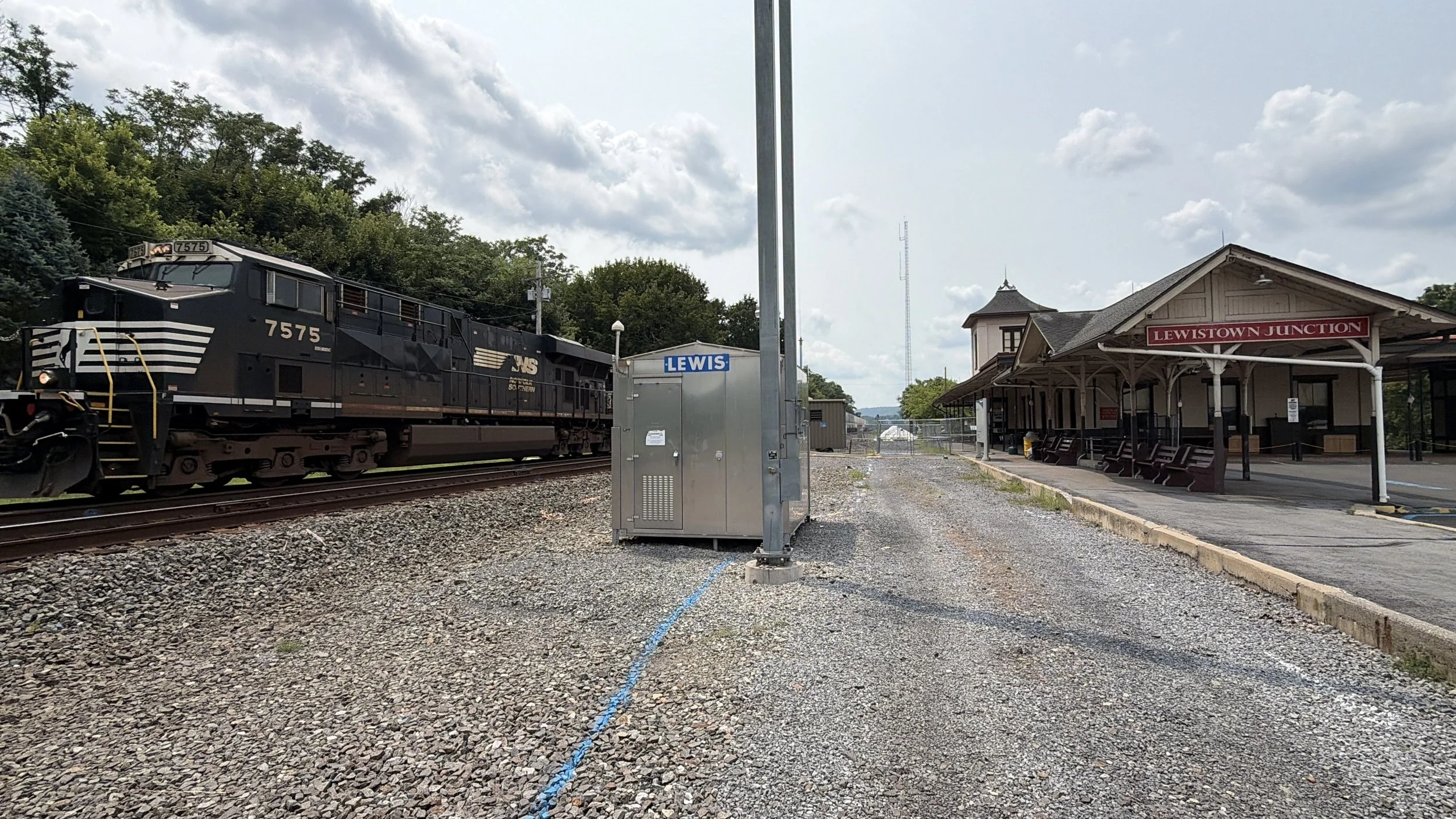
Another thing to consider is, for the most part, each NS train sounds almost exactly alike. Unlike a steam engine that has its own characteristics, every NS diesel that ran by sounded the same as the previous one. The track noise is the same. The horns are the same. But that’s irrelevant. This is an actual recording of what it sounds like at Lewistown Station. Most of the NS freight trains are going by at 60 mph so there’s not a lot to hear other than steel on steel. Some trains are heard almost one right after the other, while other times, several minutes go by until the next train is heard. Nothing has been edited to shorten the sequence. It is what it is. The only thing I’ve done is to add a thunderstorm… actually several thunderstorms to give the illusion of some really bad weather. Which is, in case you haven’t realized it by now, is the reason for the AI-generated image at the top of this page.
Below is what the day actually looked like.
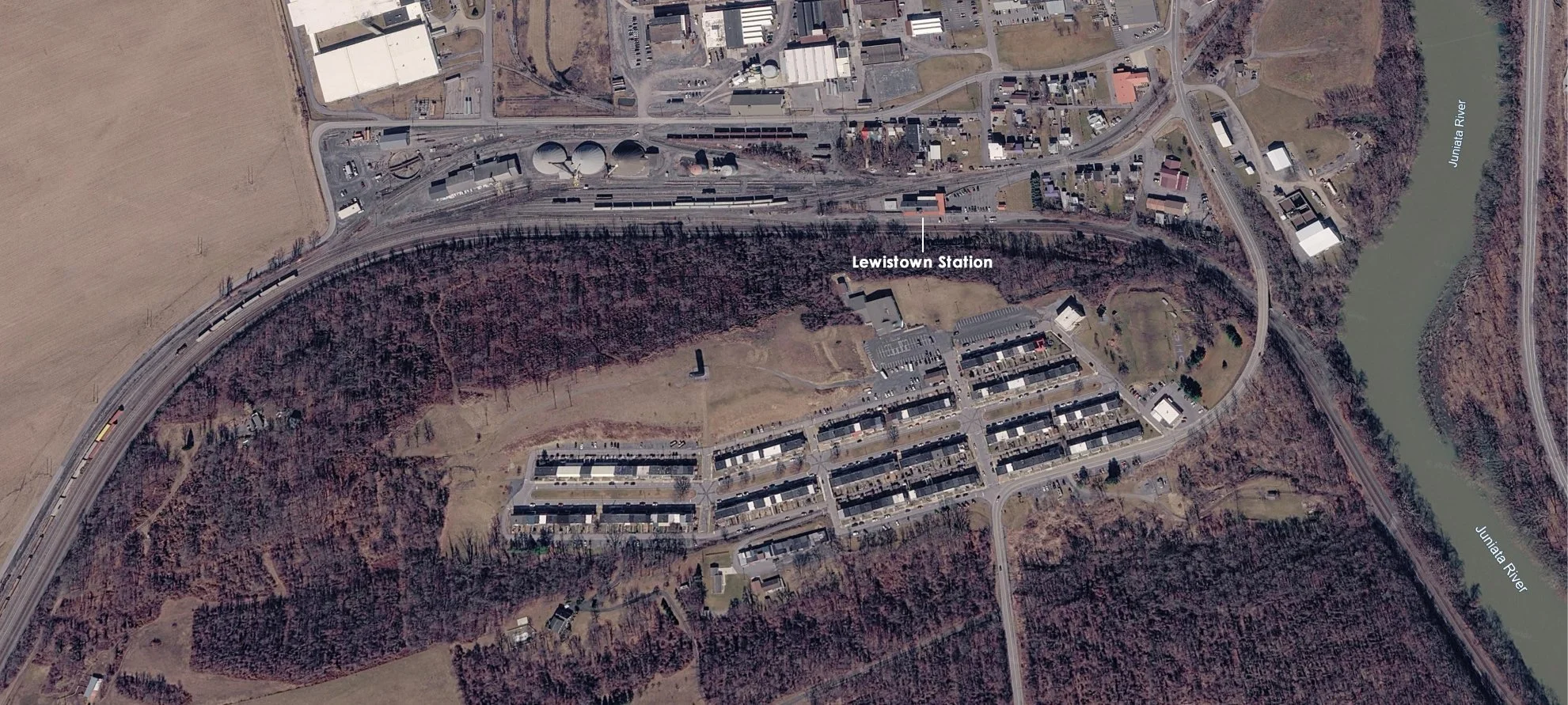
One very important detail I have to point out is the fact that watching trains in Lewistown is very dangerous if you’re stupid. The map below shows the area in which the station is located and you can see how a train approaches on a curve from BOTH directions. In other words, you do not hear the train coming until it’s right on top of you. Some NS engine crews would sound the engine’s horn from a distance just to let the railfans who constantly gather at Lewistown know the train is approaching. By the time you hear the horn from the approaching engine, you have seconds to get away from the tracks.
And that’s another issue I found while making my recordings; the station is a haven for railfans… some pretty annoying railfans. These guys appear to live at the station; arriving at the crack of dawn and not leaving until the exterior lights go on at night. Every single day. Judging by what I’ve heard in some of John’s recordings, he had to deal with the same type of annoyance but not to this degree. Lewistown is a public place, and I’m sure NS crews who pass the station regularly are aware of the railfans who are constantly present… which is why some give a few blasts on the horn as they approach just to make the train’s approach more noticeable.
Even with the thunderstorm soundscape added to my recordings, you can still hear how one second there’s rain in the foreground, then a second later, an NS engine is exploding on the scene without any warning. That’s exactly how it is at Lewistown.
Take It For What It Is… Nothing More
So, exactly what is the recording featured in this episode of LwS EXTRA? Nothing. It’s not a deep dive into anything historic. It’s not trying to prove a point or relate to anything that specifically happened to John Prophet while he was recording in Pennsylvania. This is a fun recording I made simply for relaxation, meditation, or just to see if I could pull off what Brad Miller successfully pulled off in “Steel Rails Under Thundering Skies.” I’m not stating anything overly technical about the train activity because it doesn’t matter. I have no idea what each train was or where it was going. Again, it doesn’t matter. This recording is nothing more than my attempt to fully understand what John went through when HE made recordings in a very public place or in the rain; such as the one he made in Big Moose, NY.
It IS a staged recording in the grand scheme of things, but I honestly don’t care.
As my wife said, “it is what it is.” Nothing more. I made this soundscape for my enjoyment and hopefully for yours as well. Don’t over-analyze it.
Simply listen and enjoy.
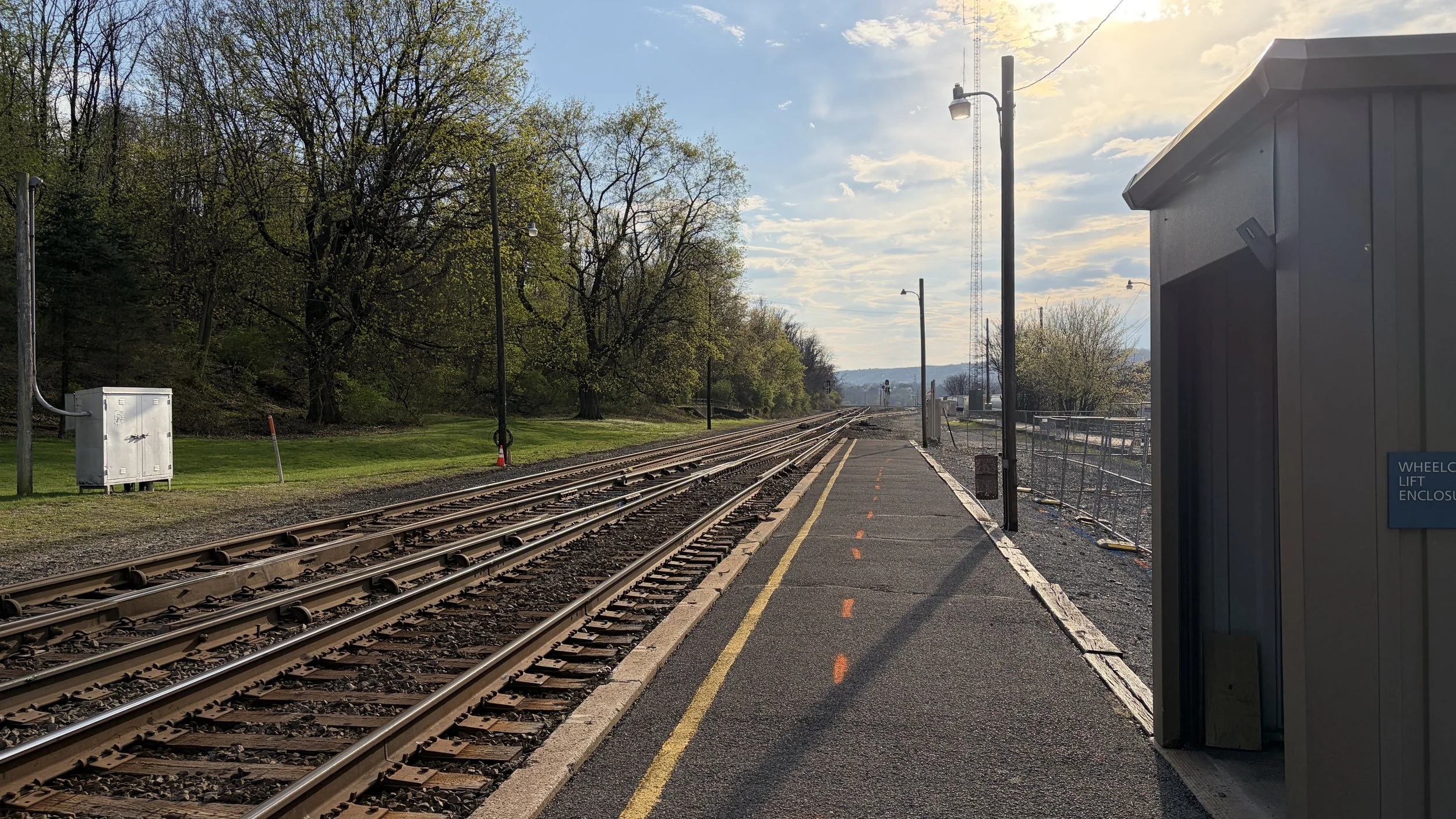
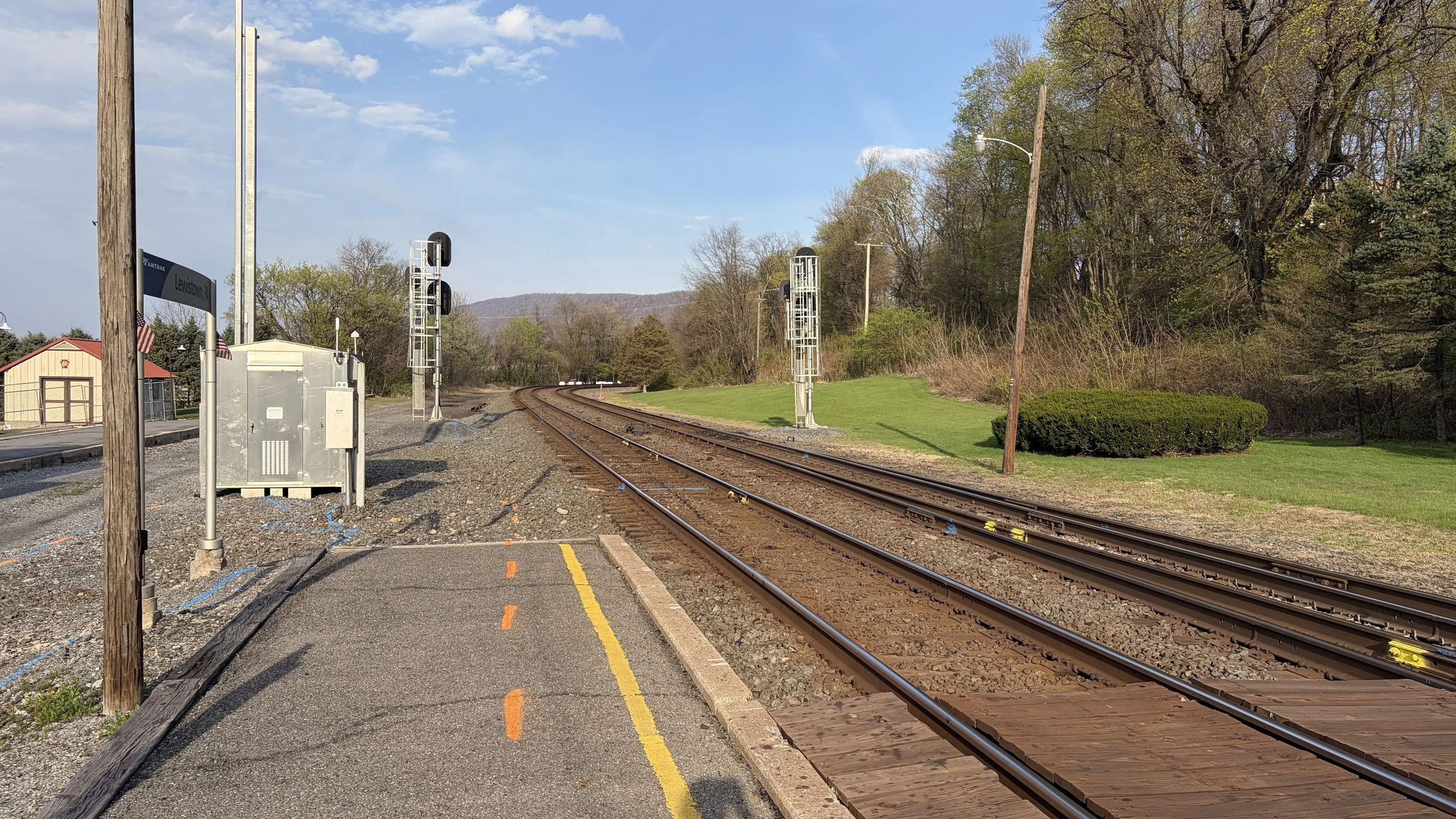
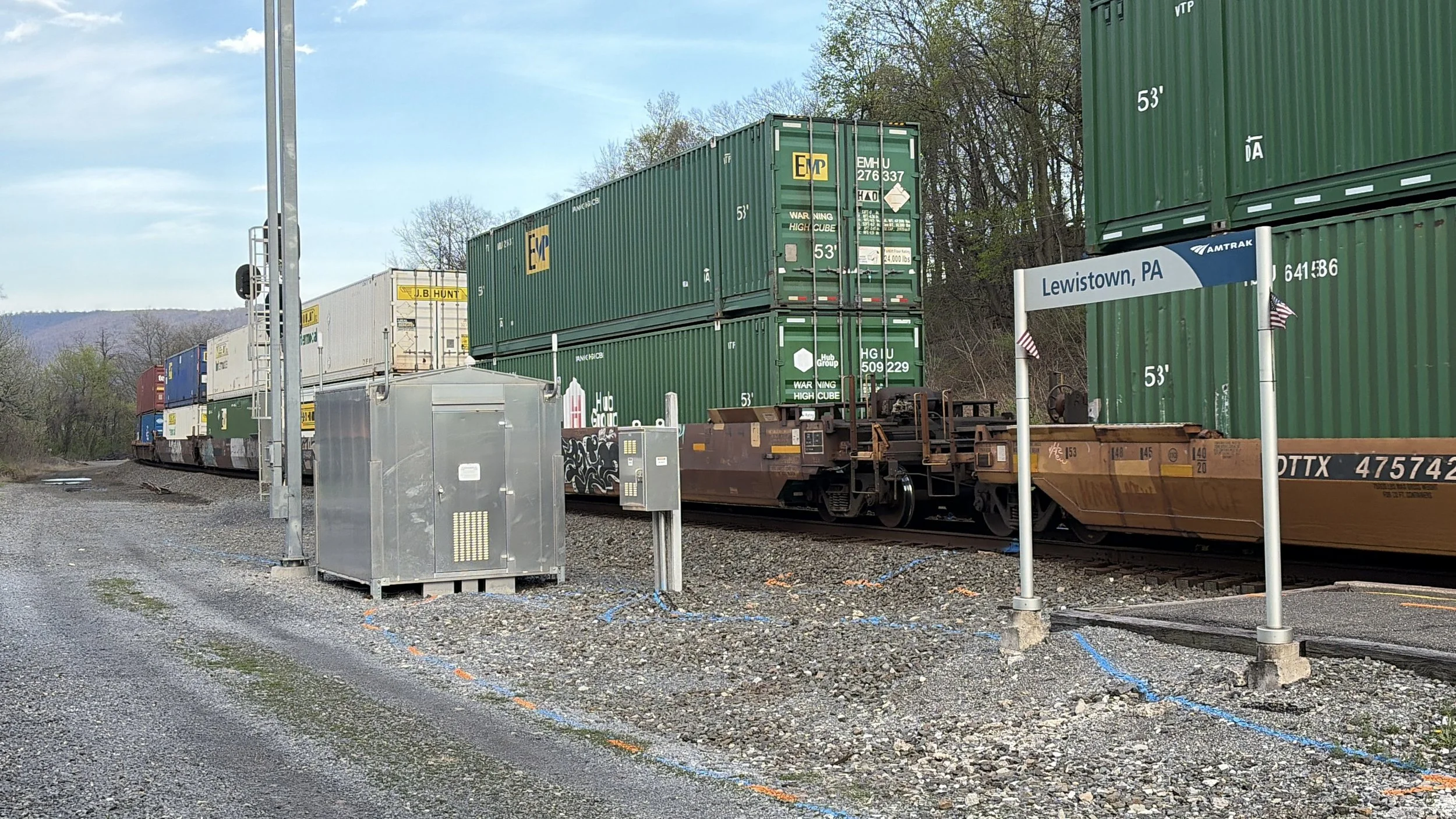
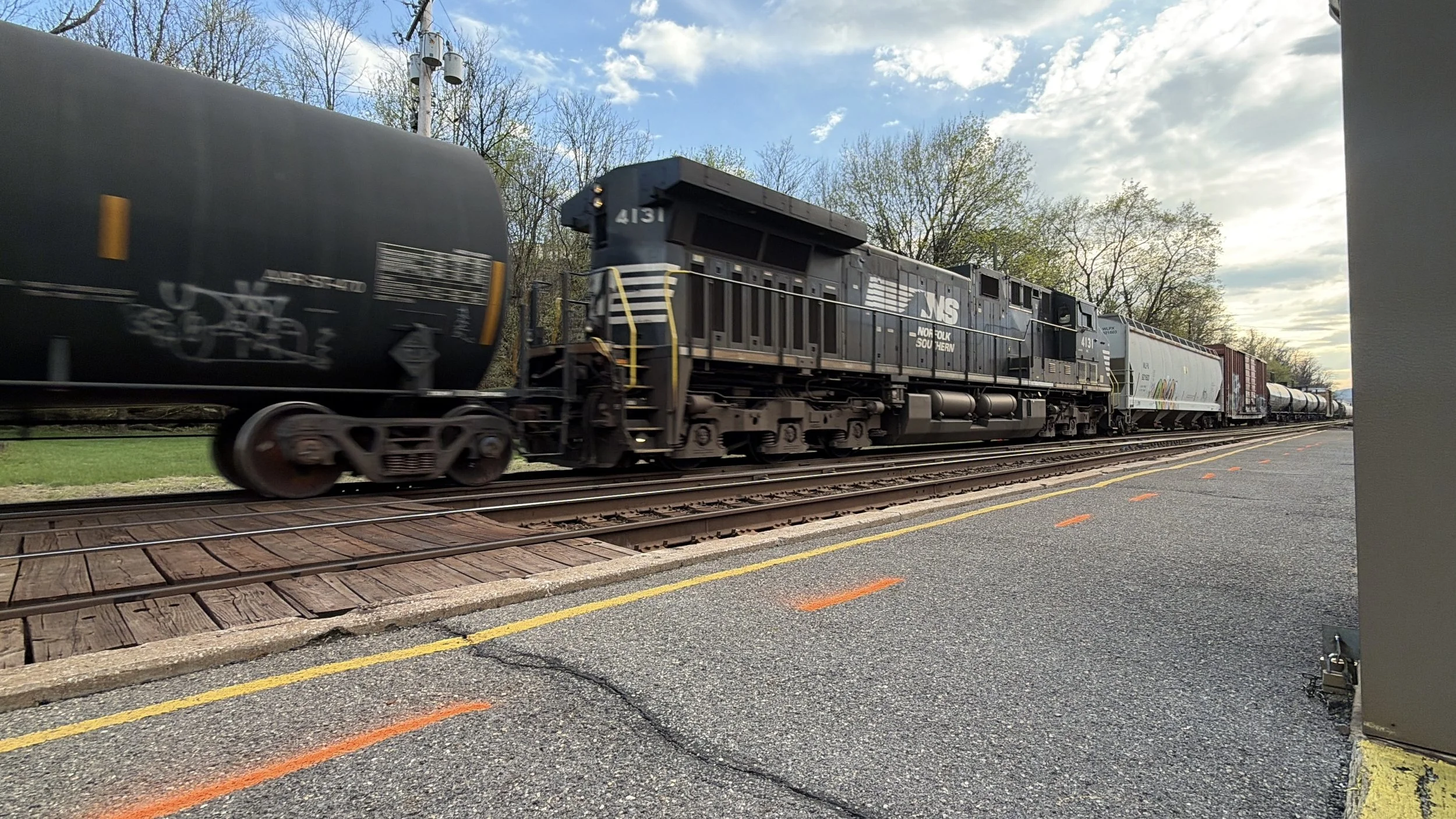
The video below will give you a pretty good idea of how Norfolk Southern trains run by at Lewistown. You’ll clearly see how fast the train comes around the curve and is pretty much on top of you before you have a chance to react. The clip below is only a small segment of the original video… which is close to 8 minutes long!