LwS EXTRA: “Train Sounds for the Model Railroad”
This episode of Living with Steam EXTRA is a bit different in that I’m featuring several of the railroad sound recordings from my collection taht were made specifically for adding a bit of realism to a model railroad; specifically an O-gauge model railroad which was the predominant gauge when these records were sold. The post-war period in America saw an incredible boom in the demand and popularity of O-gauge model trains from manufacturers such as Lionel, American Flyer, and Marx. However, the fact remained that regardless of how authentic these trains looked… they were “toys.” They were INCREDIBLE toys for sure… but still toys.
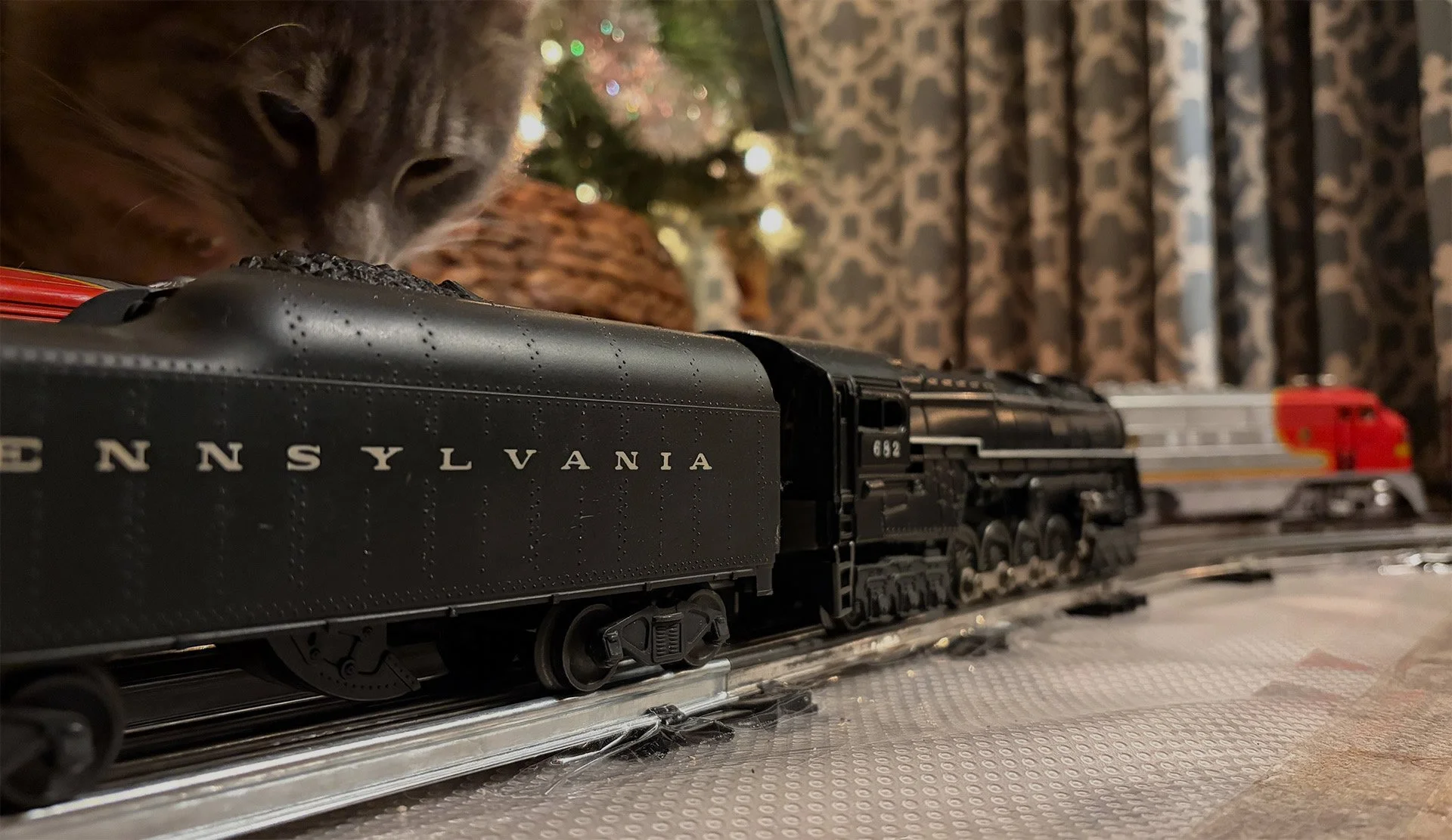
Nothing about a 3-rail O-gauge track came close to the real thing, and if one didn’t have a large room to build an elaborate Lionel model railroad, the train came out primarily at Christmas time… when realism wasn’t necessary. The train running around the tree added a feeling of warmth and tradition to the Christmas season. In my house, Christmas just wasn’t “Christmas” without my 1954 Lionel running noisily around the tree. When that Pennsylvania steam engine started running with its real “smoke” coming out of the stack, the smell of those smoke pellets mixed with grease and ozone takes me back to the days when my Grandfather took me to “Spoonly, The Train Man” so he could watch my eyes pop out of their sockets.
When my Grandfather was a young father himself, and he was setting up the Lionel train for my Uncle, one thing always seemed to be missing; the sounds an actual steam engine made as it traversed the layout. Those the classic Lionel trains buzzed… LOUDLY! So, if realism was what the model railroader wanted, he had to look no further than the windup Victrola or the portable Hi-Fi phonograph, and any one of the 10” 78 rpm records that were released specifically for making the “toy” seem less “toy-like”. Remember, these were days before DCC and the incredible realism it added to today’s modern model trains.
While some of the train sounds sold in those days were absolutely dreadful… sounding like a guy scraping a stiff bristle brush against a large washboard while he held one of those wooden “whistles” between his teeth… others were actually quite good as you will hear. Some of the recordings were sold as accessories for a model railroad, while others were made simply to be listened to as you ran your train to your heart’s content.
So fire up the Lionel and listen to these recordings. Hopefully they’ll add a bit of realism to your layout… regardless of its size and ability to attract cats.
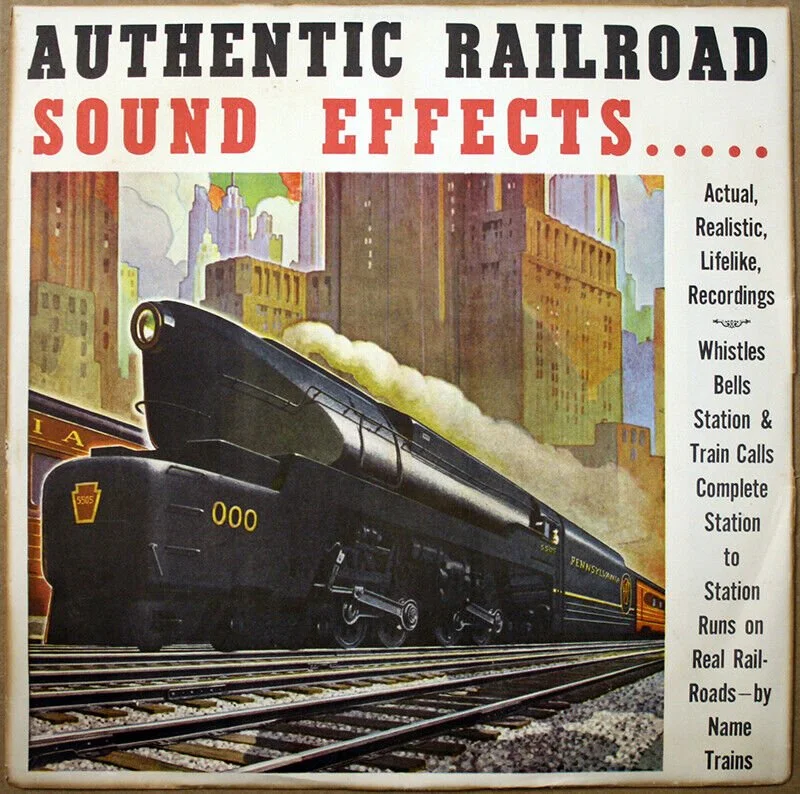
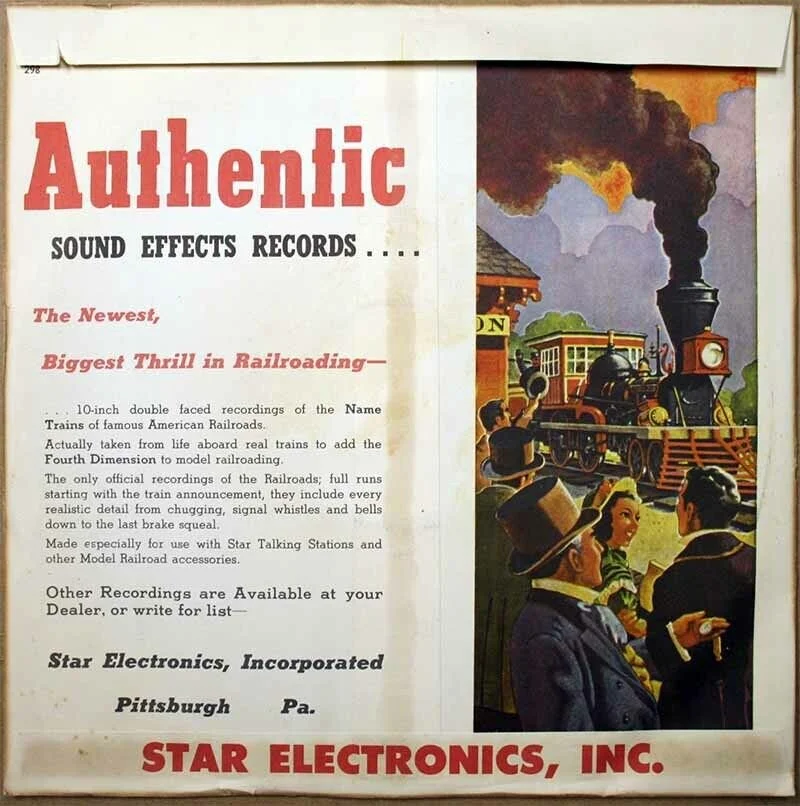


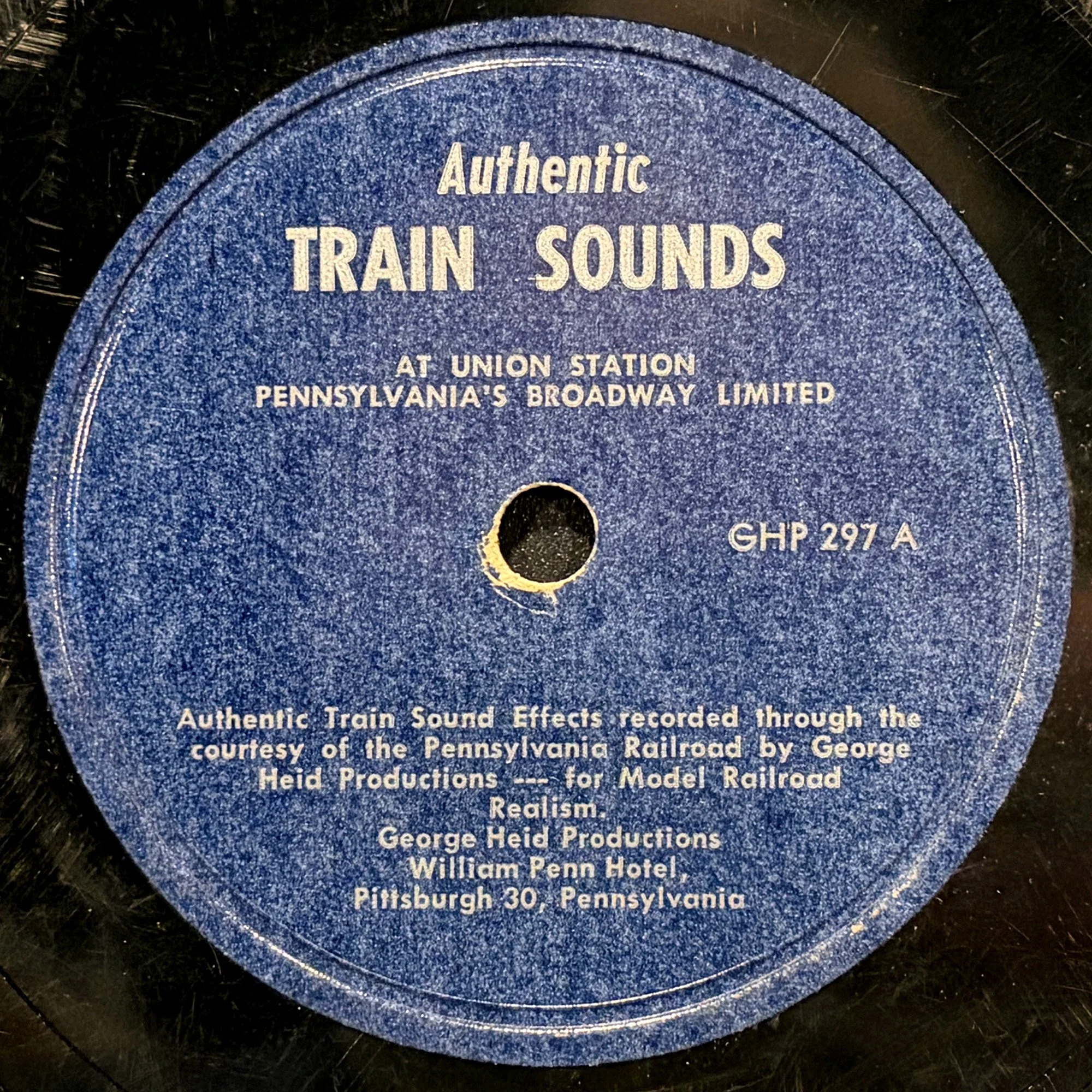

Above is the cover and labels for the “Authentic Railroad Sound Effects” record, released in 1952. When I first listened to this set, I got a bit confused because the title on the cover and the title of the records in my collection are different, yet the same recordings on contained on both versions. Hopefully I didn’t get this wrong, but it’s possible that the masters for these records were simply sold to a different company who re-released them. As stated in the episode, this set is the one William A. Steventon (of the Railroad Record Club) received as a Christmas gift from his wife. After hearing the recordings, Steventon was very disappointed because it was clear the contents of these records was all staged. If anything, “Authentic Train Sounds” showed Steventon how NOT to create a railroad sound effects record.
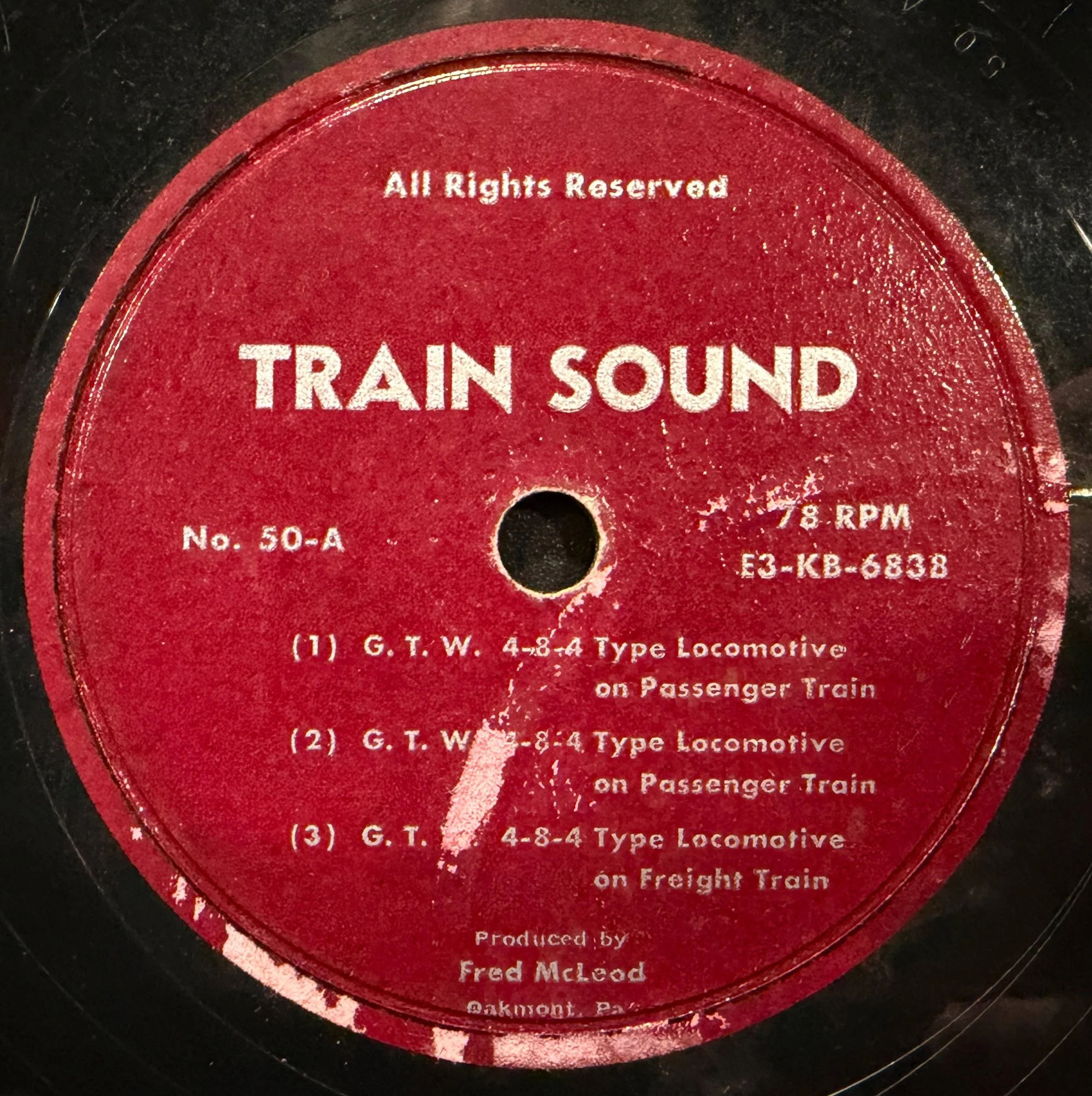
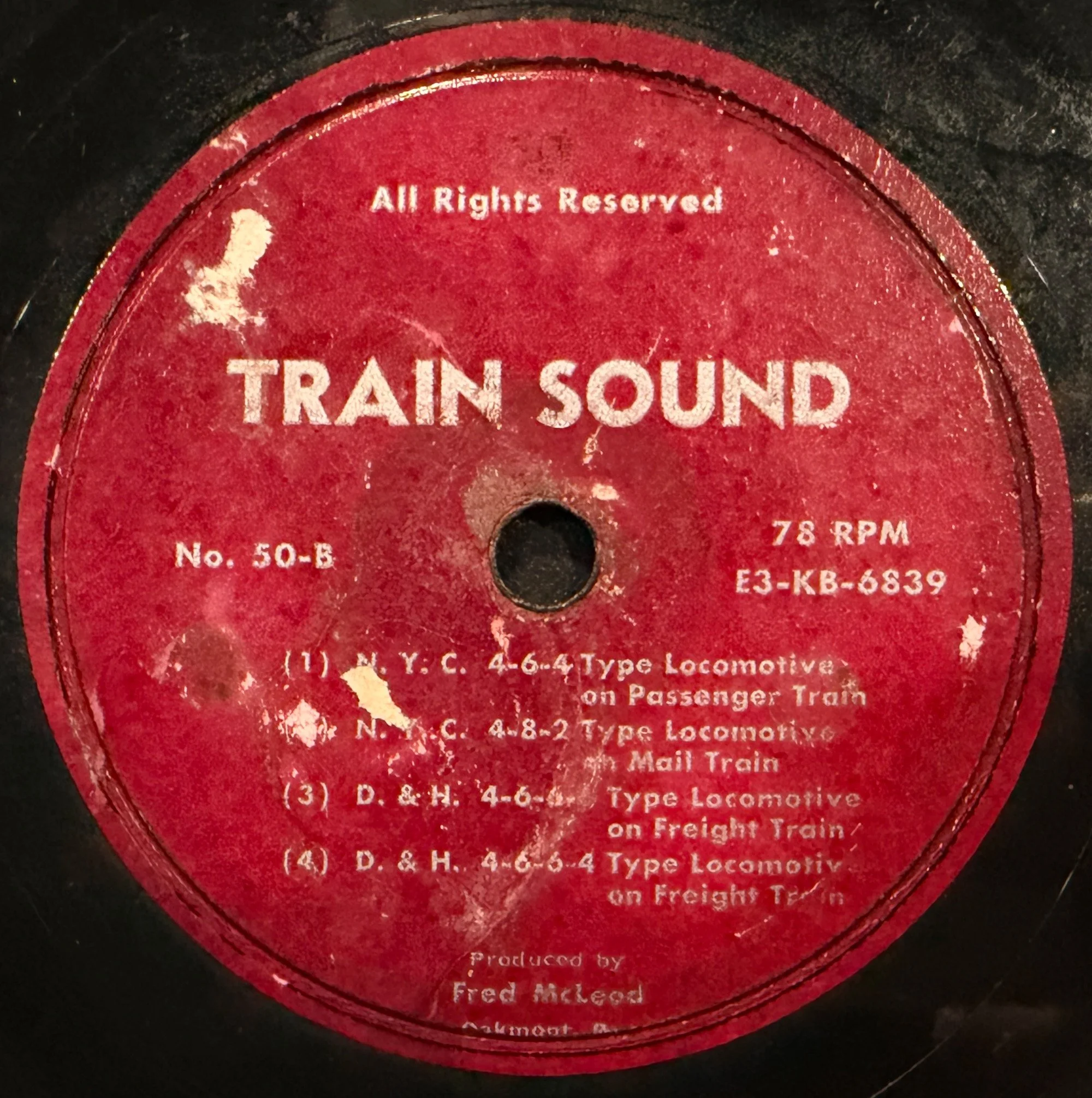
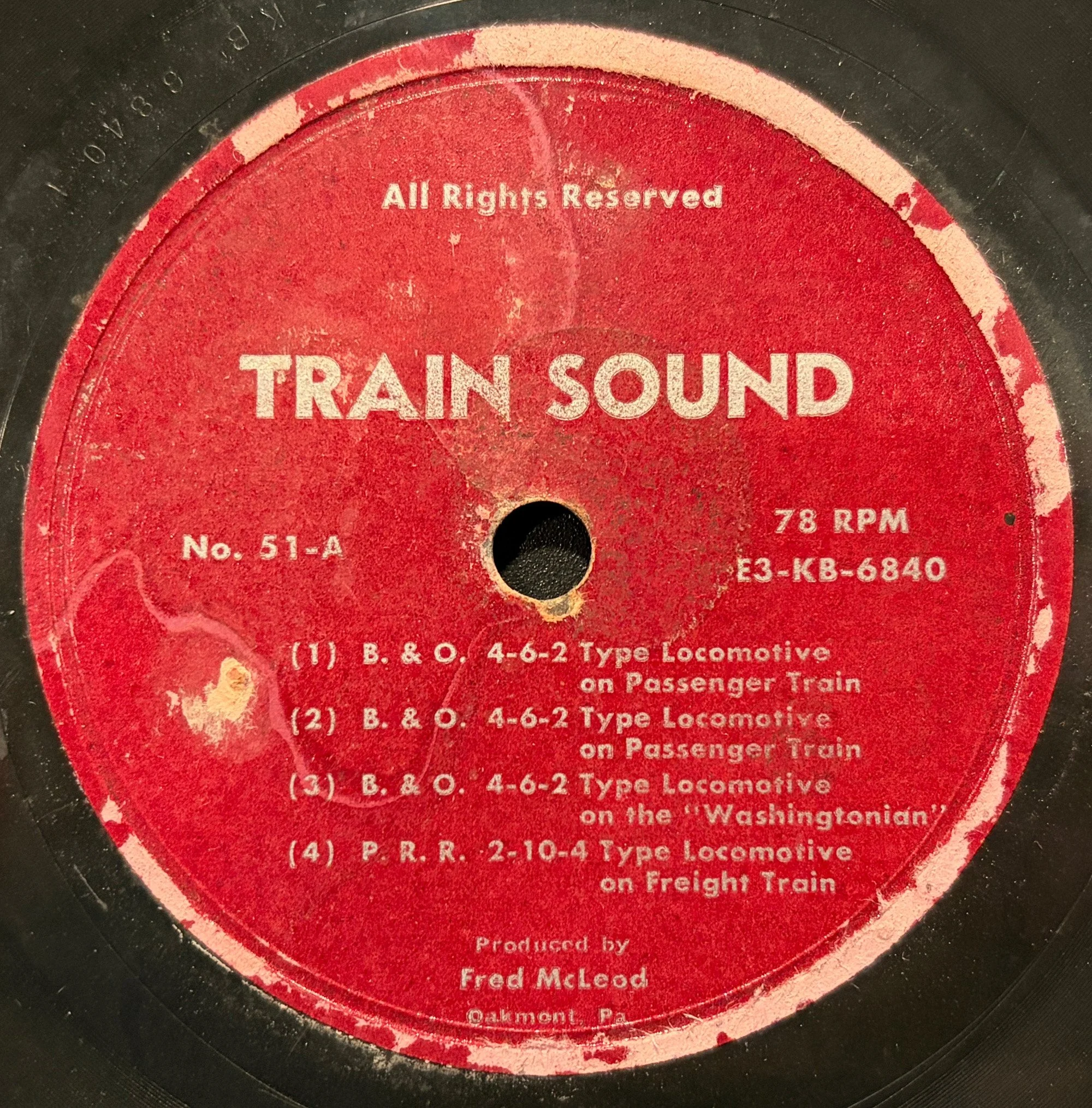
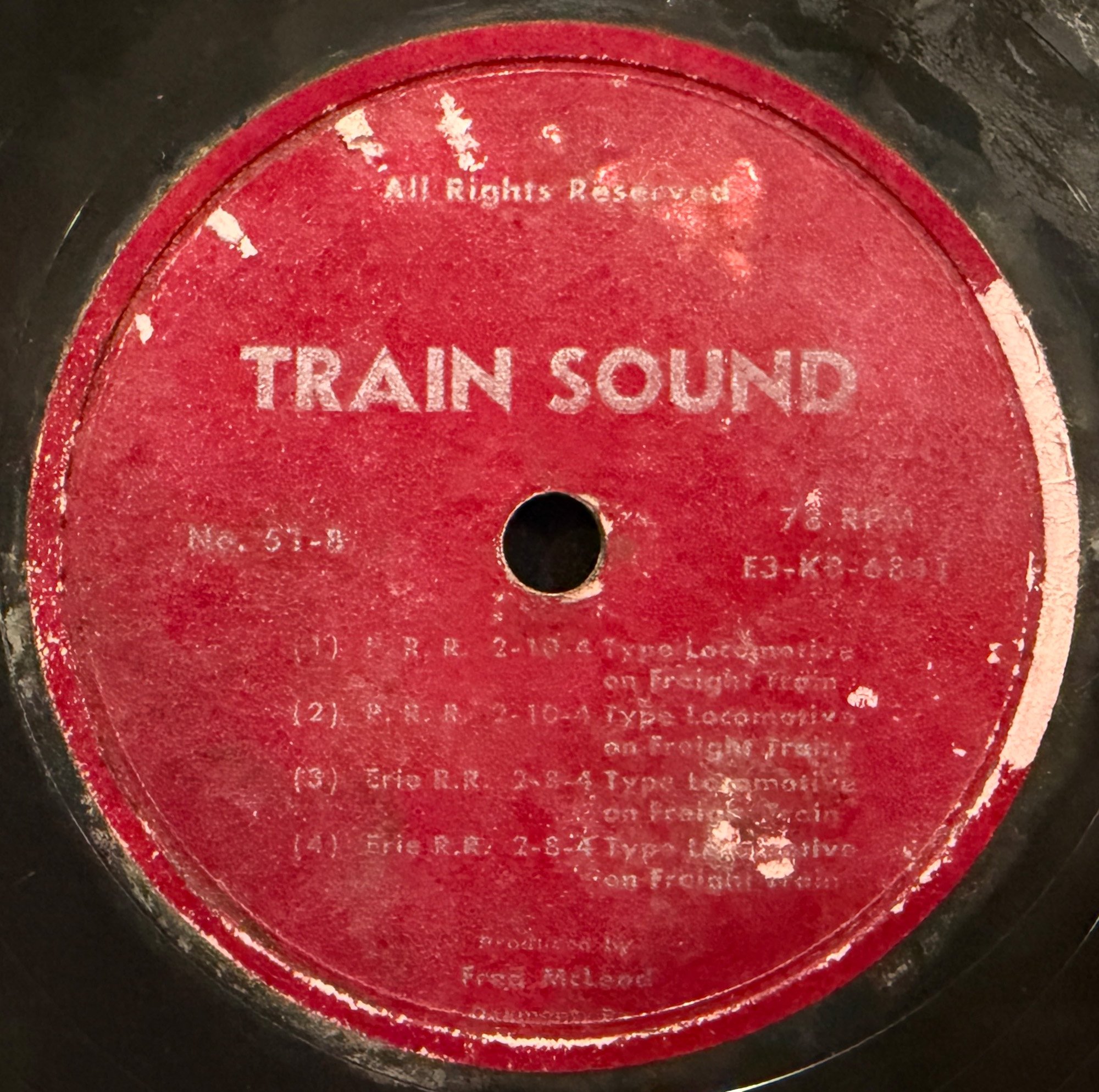
Above are the labels for the “Train Sound” series produced by Fred McLeod. Even though the recordings contained on these records are very real and quite good, the sequences start and end quite abruptly… almost as if Fred spliced the film segments together to make the masters for the records. Actually, that’s probably just what Fred did since he was using a 16mm camera that was capable of embedding sound directly onto 16mm film.
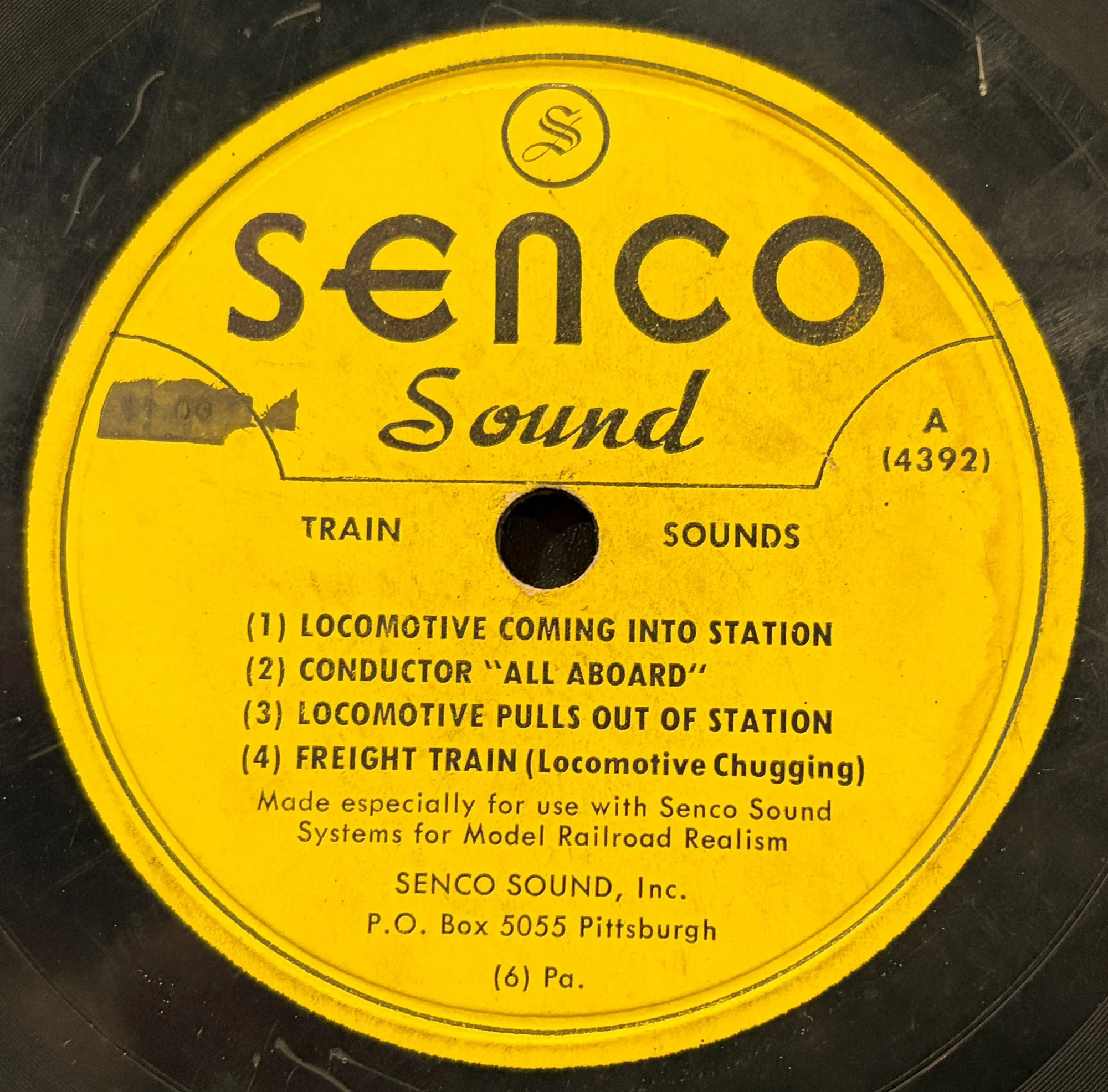
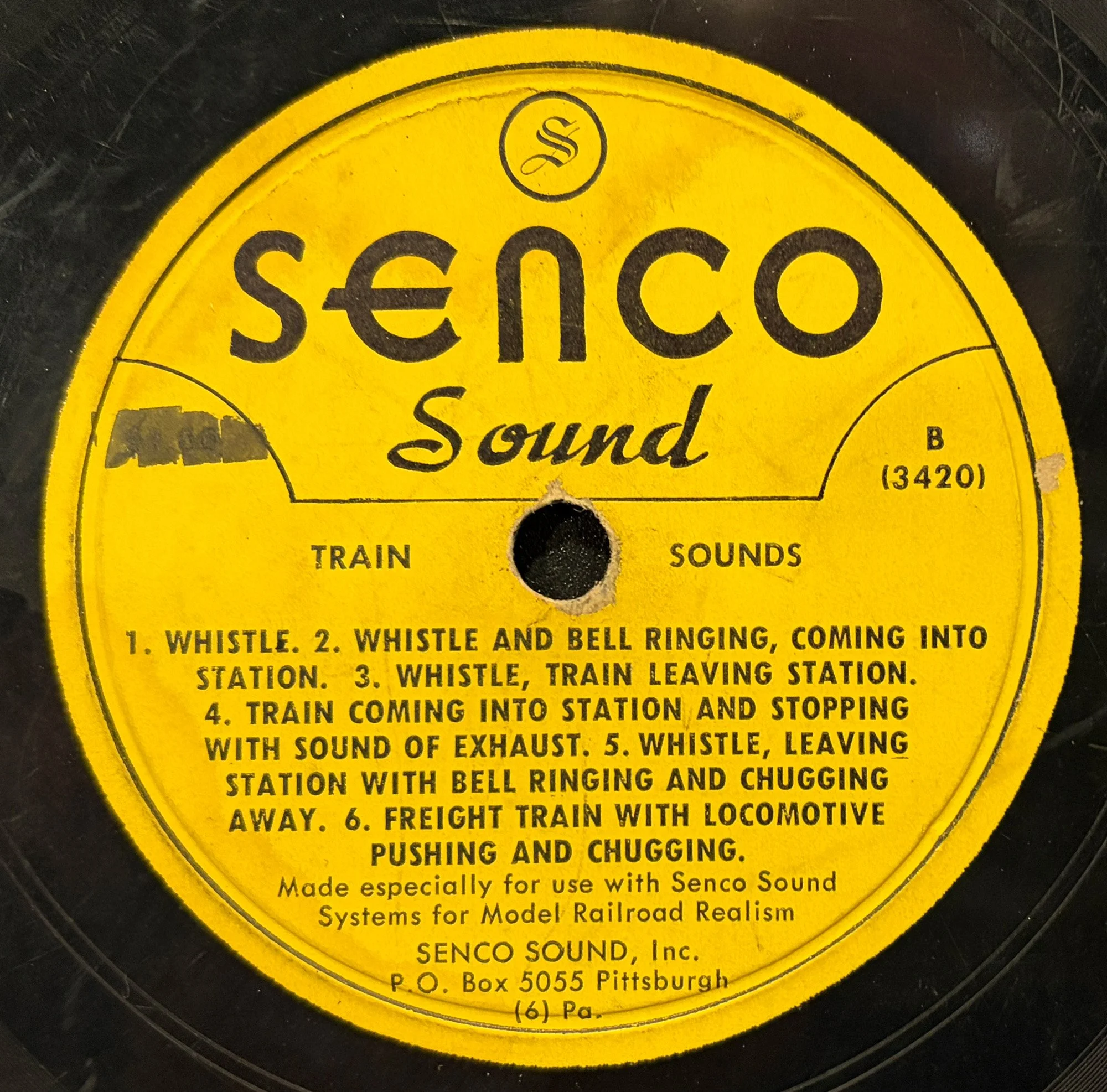
This is one of the recordings released by Senco Sound. This company came up with an ingenious way to have the actual railroad sounds coming from the record play back through a specially designed tender purchased as an accessory to a Lionel train. The record was loaded onto a phonograph (if you didn’t have one, Senco Sound sold a phonograph that worked with their system), and the output of the phonograph was connected to the O-gauge track via a “transmitter.” As the tender rode along the track, a receiver and speaker inside the tender picked up the transmitted sound and played it back. How cool was that!
I’ve never seen a Senco Sound unit in action, but I would love to hear from any listeners who own a working unit.
For more information and pictures on the Senco Sound system, head over to Cornucopia of Toy Trains’ Senco Sound System page at https://cornucopiaoftoytrains.net/senco-sound-system/
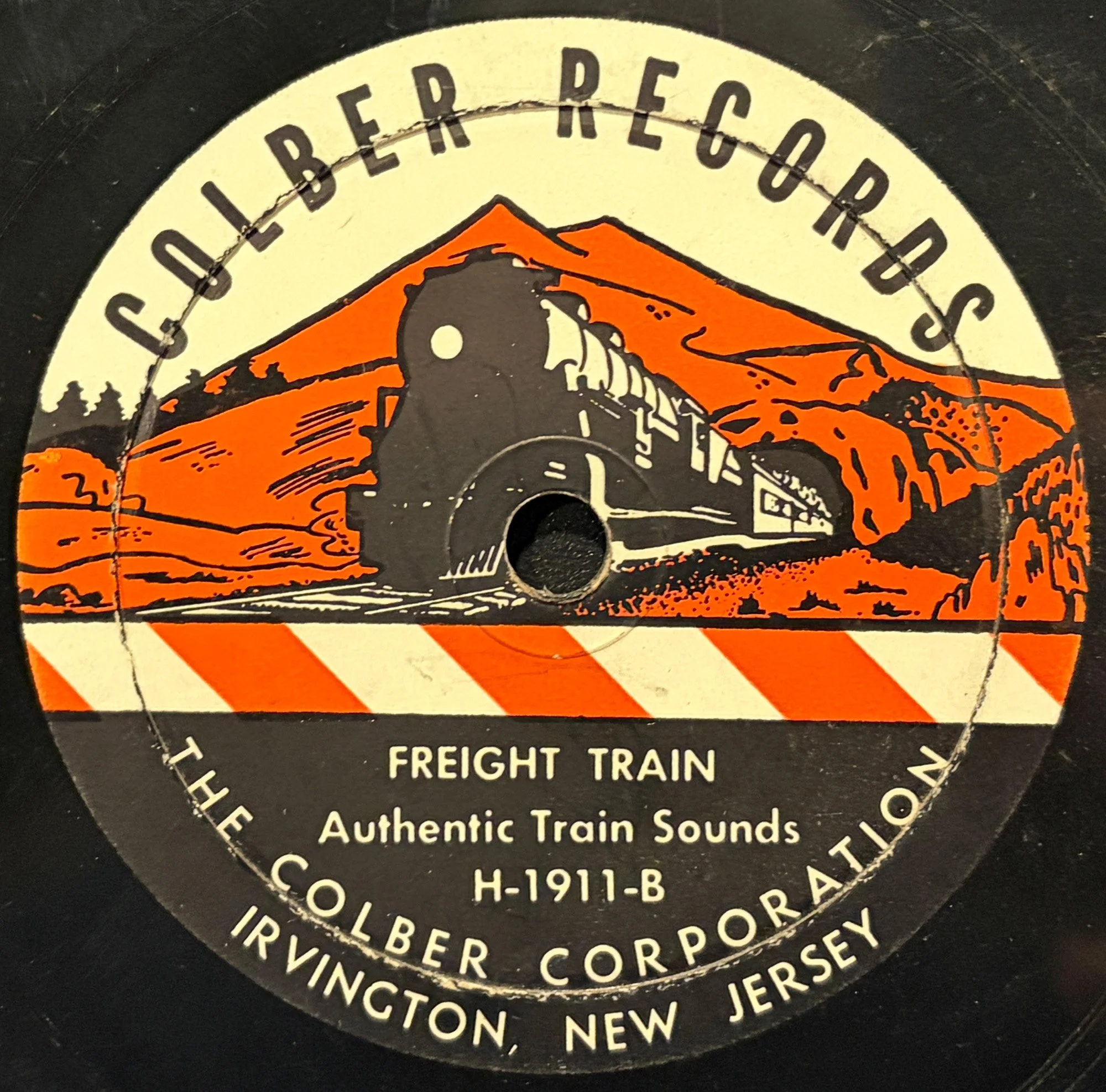
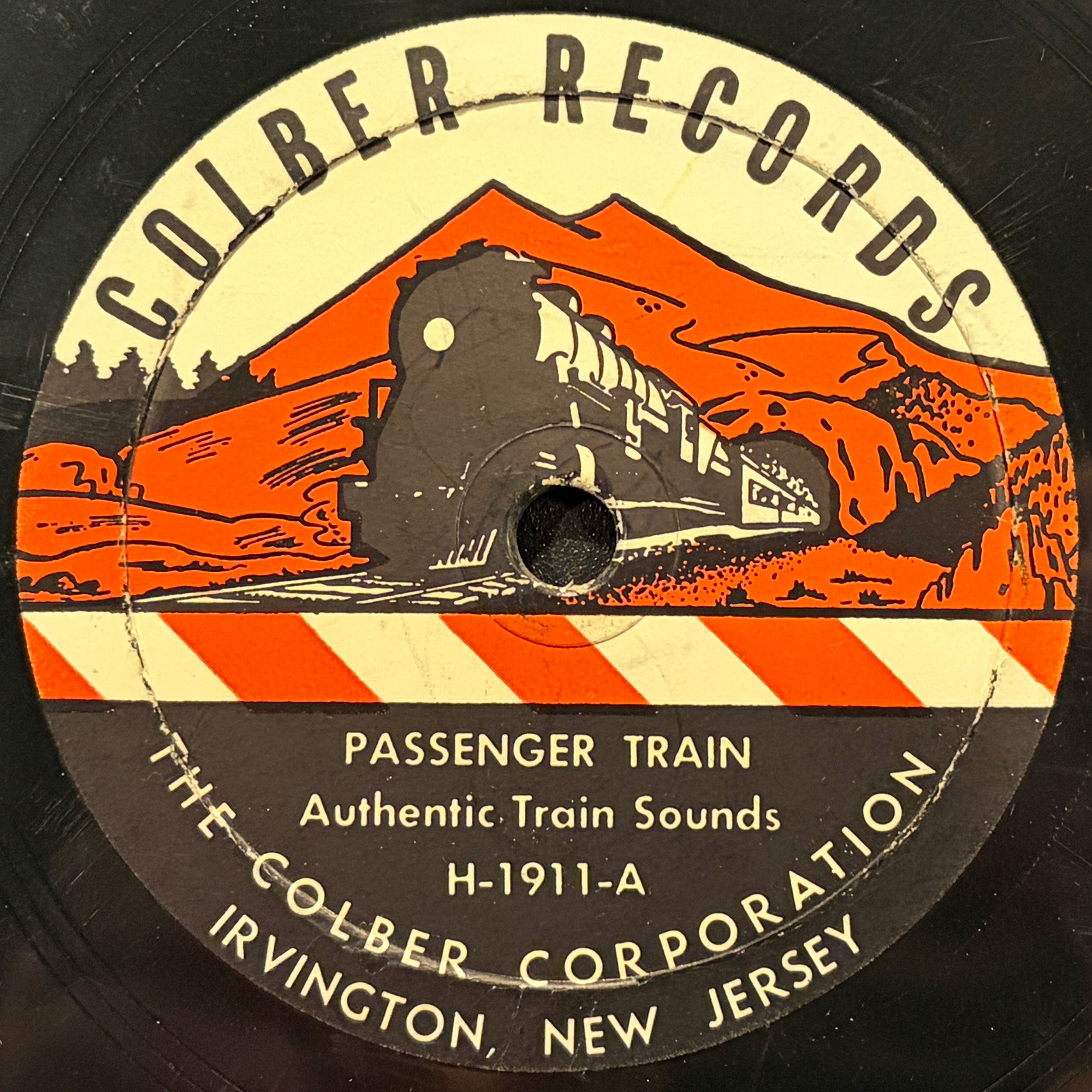
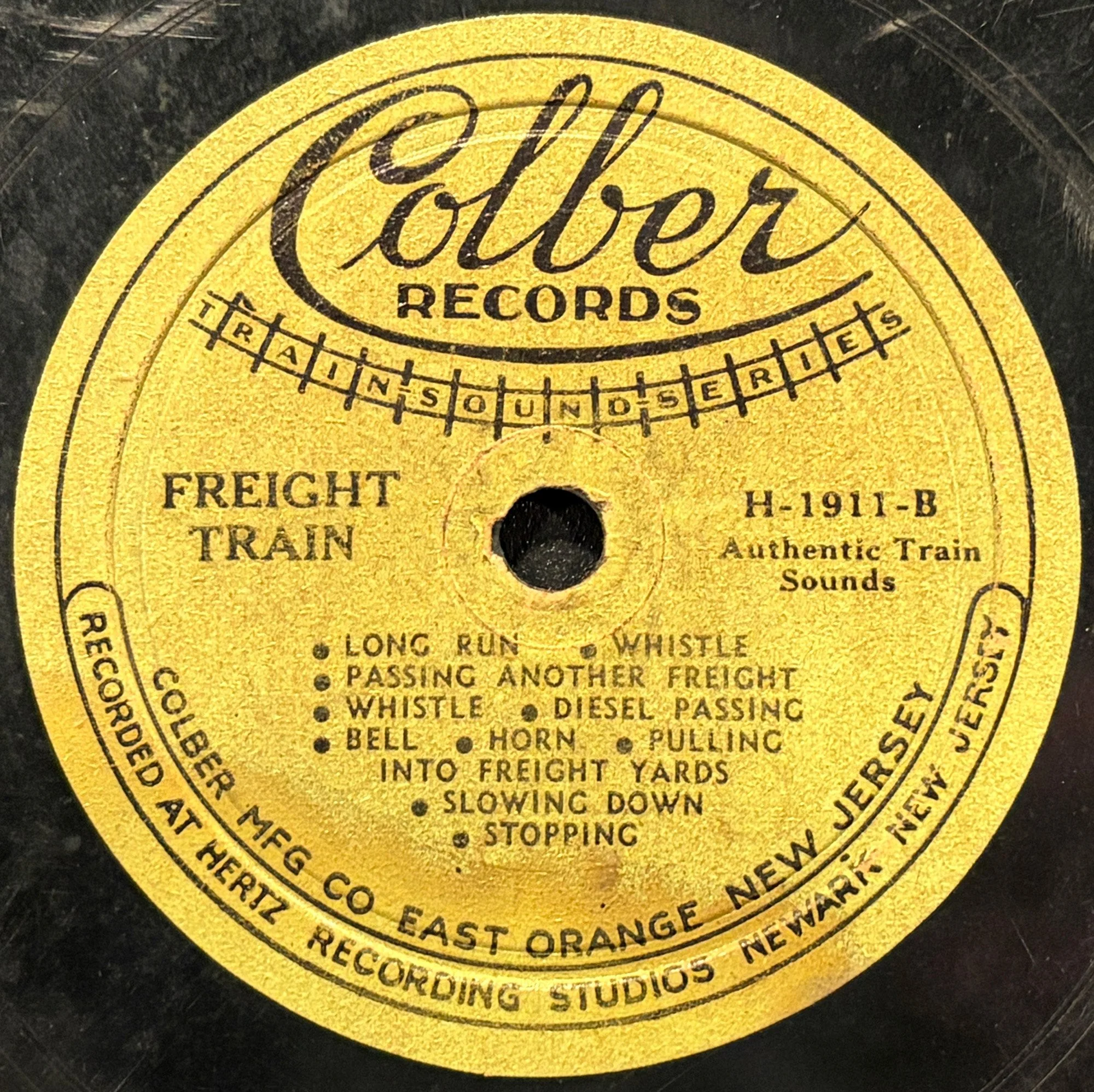
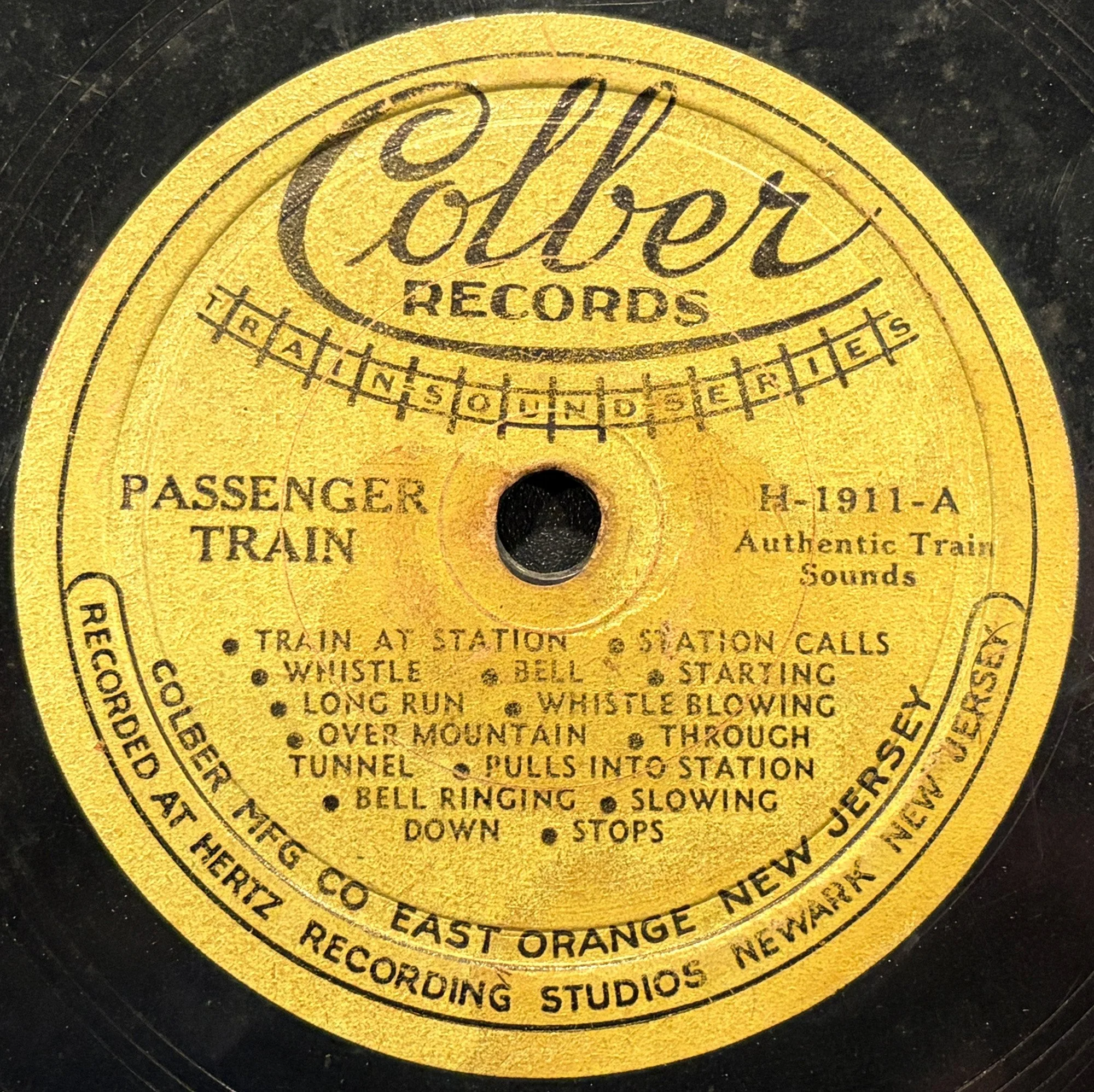
Above are two examples of the sound recordings offered by Colber Records, a subsidiary of Colber Corporation, who’s claim to fame was manufacturing knock-off accessories for Lionel and American Flyer. When the accessories market began to dry up a bit in 1954, Colber sold their molds, dies, and drawings to Marx. Colber found themselves facing legal troubles in 1950 when Lionel sued them for having packaging look just a little bit too close to that of their own; right down to the same orange and blue color scheme and typeface.
If you can get past the high-pitched, nasally voice of the “conductor”, this record is actually very good.
Once again, pay a visit to Cornucopia of Toy Trains website to view their extensive Colber page (https://cornucopiaoftoytrains.net/colber/)
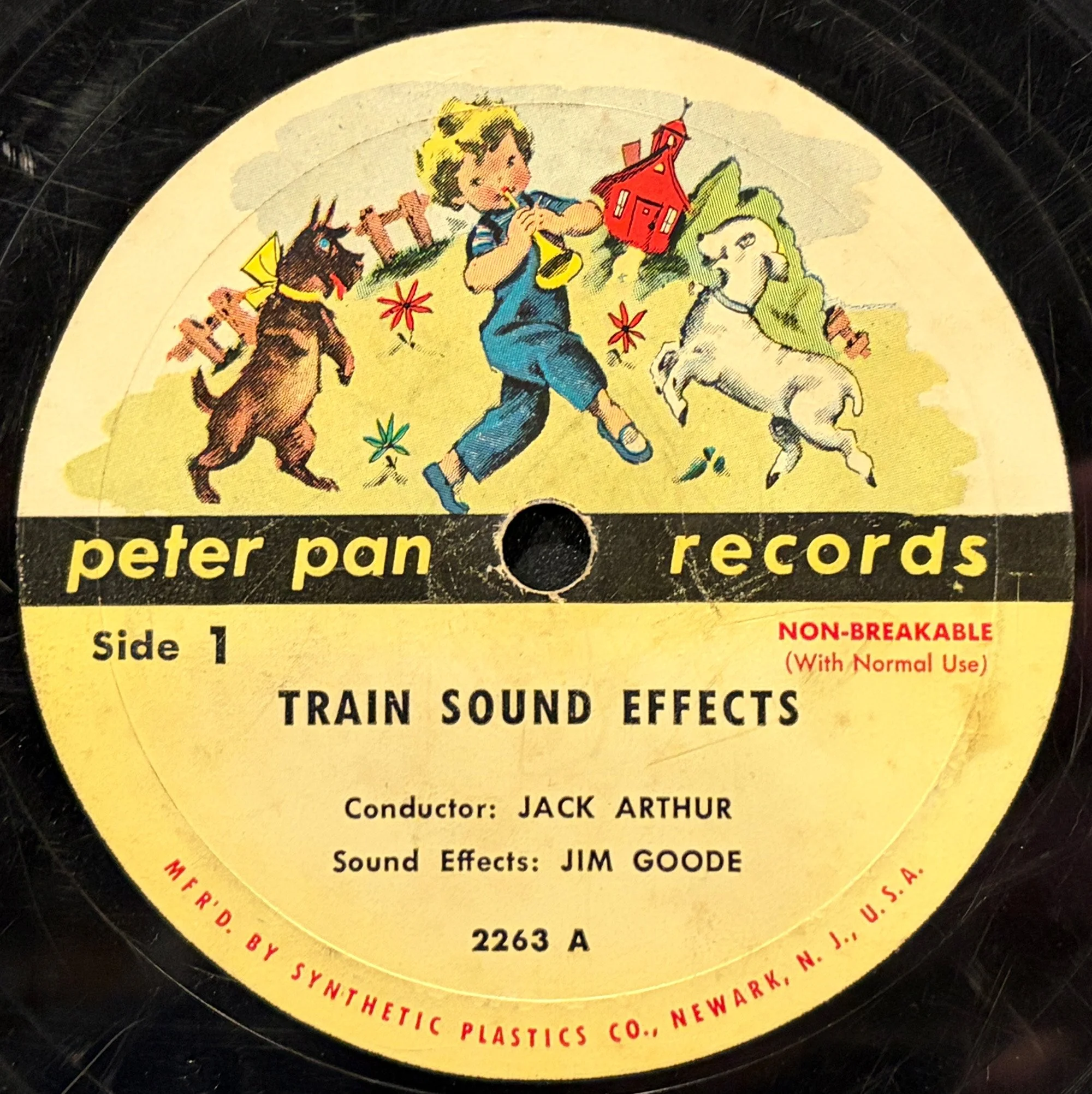
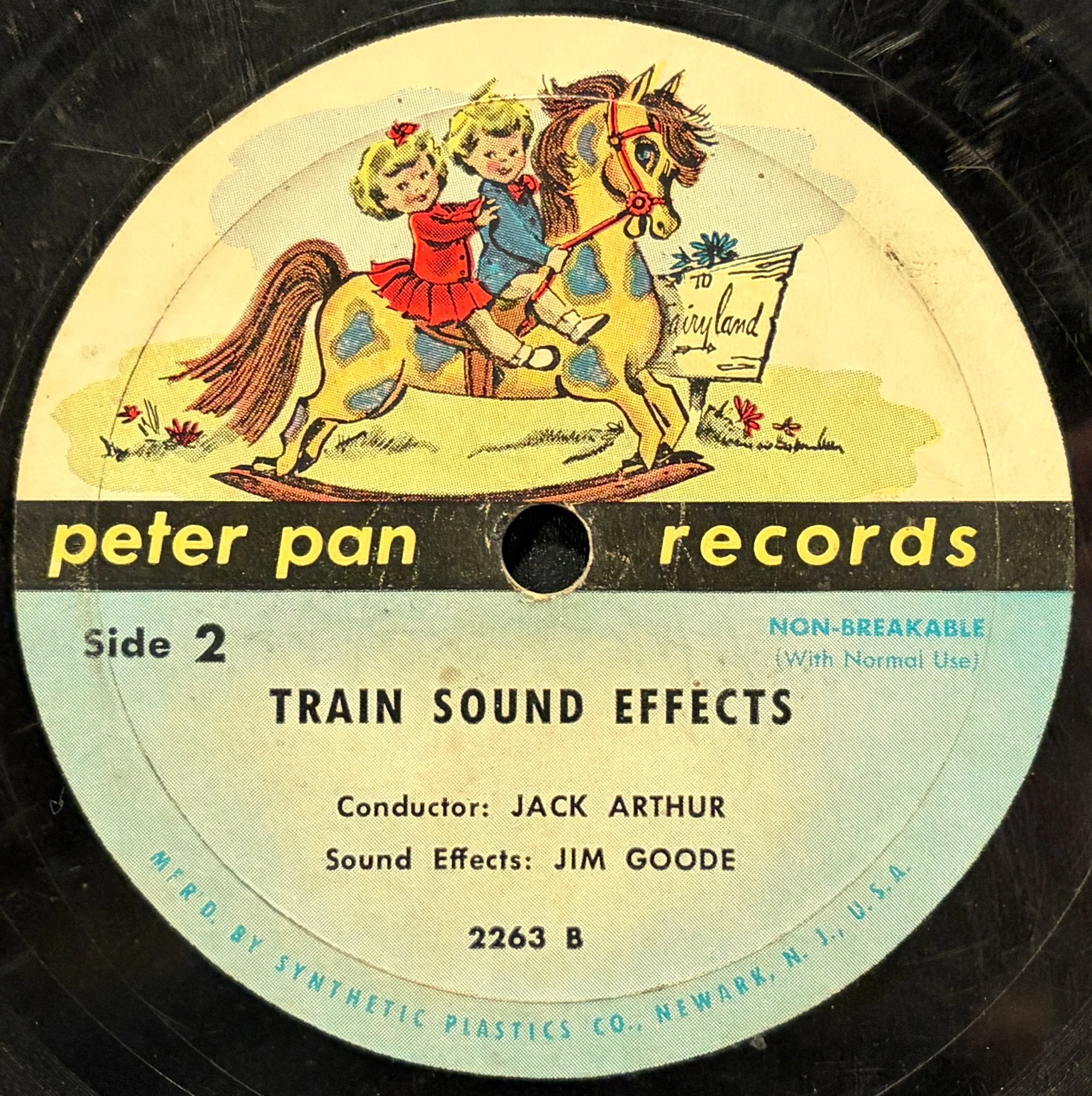
My favorite record out of the whole lot; “Train Sound Effects” released by Peter Pan Records sometime in late 40s or early 50s. What makes this record so charming for me is that it doesn’t pretend to be an authentic recording of an actual ride in a coach car while a conductor busily wanders up and down the isle assisting passengers and calling out the stops. This record was made solely for children. If anything, it helps to enhance a child’s imagination of what it would be like to take a trip on a train pulled by a steam engine as it makes its way down the Northeast Corridor to Grandma’s house. Imagine going from New York to Atlanta in 6 minutes! Wonderful stuff, for sure.
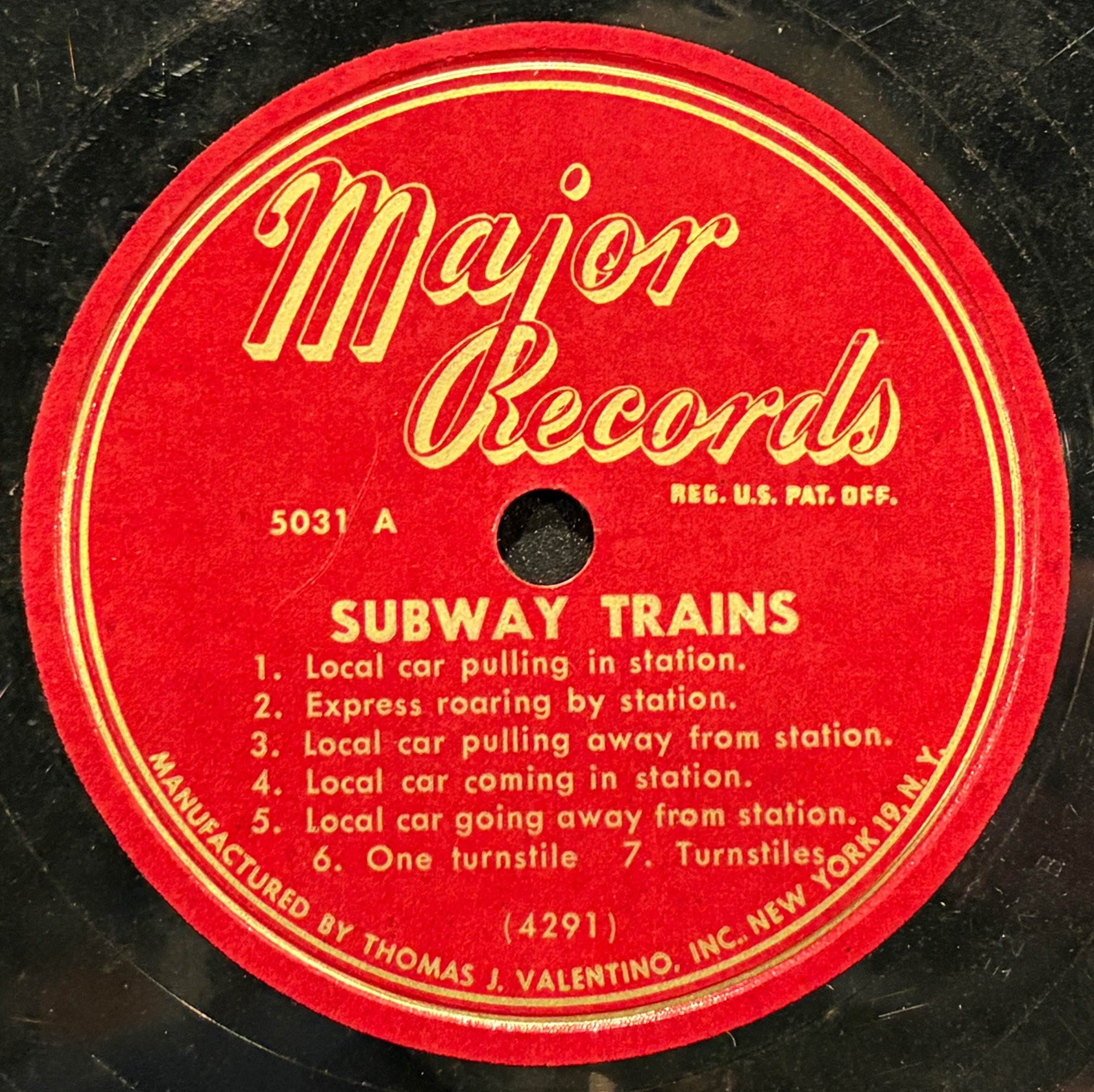
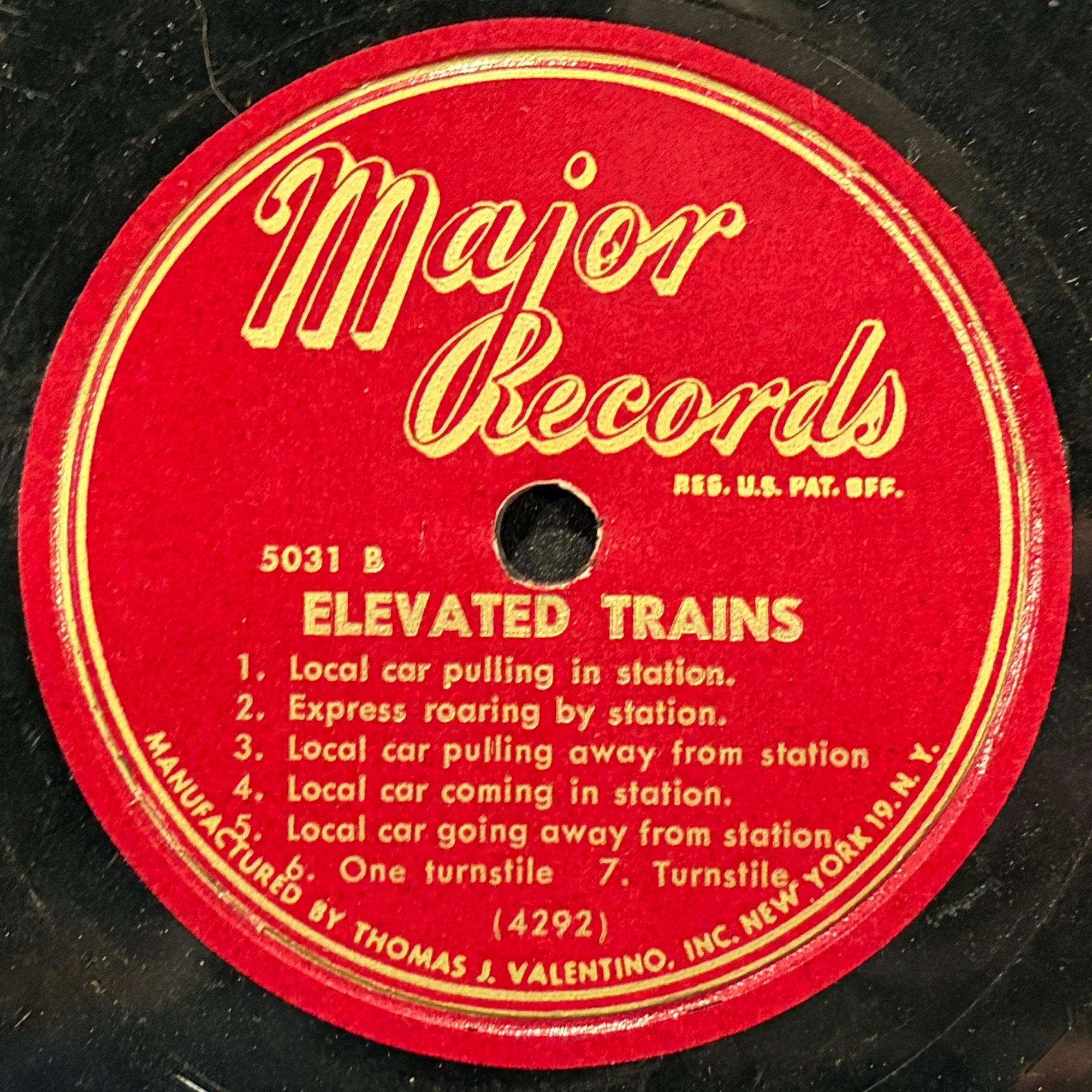
This one may have been part of an actual sound effects library produced by Major Records. Each cut on this record is separated by a run-out groove so once the desired effect plays, the tone-arm of the phonograph will park itself at the end of the track in order to prevent an unwanted track/effect playing out. This was especially useful if the sound engineer for a classic radio program like “Yours Truly, Johnny Dollar” needed to do a needle drop of a subway car pulling away from the station while he and his assistant are simultaneously performing live foley sounds of people walking in a station, announcements over a PA system, or luggage being dragged on a floor.
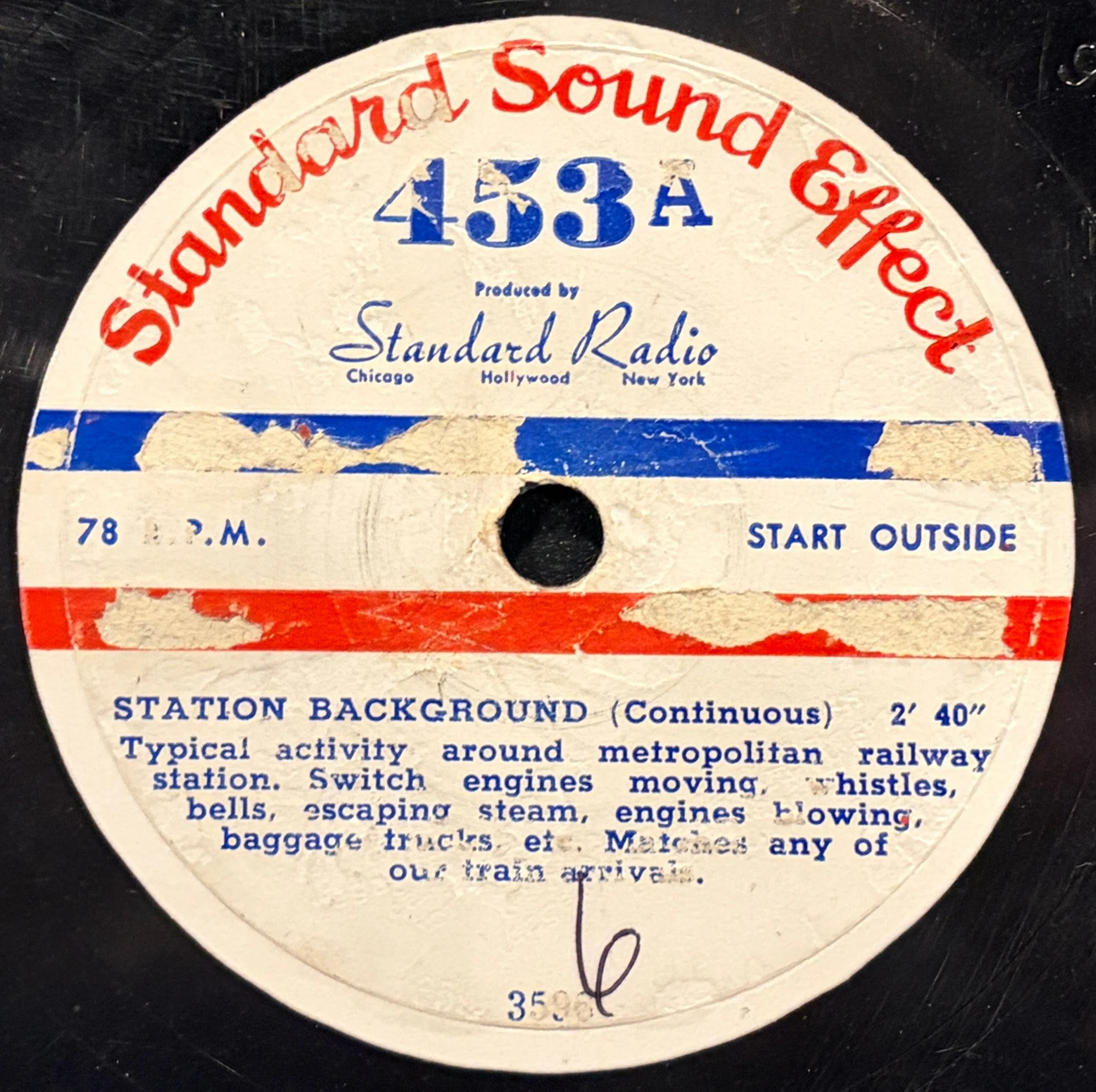
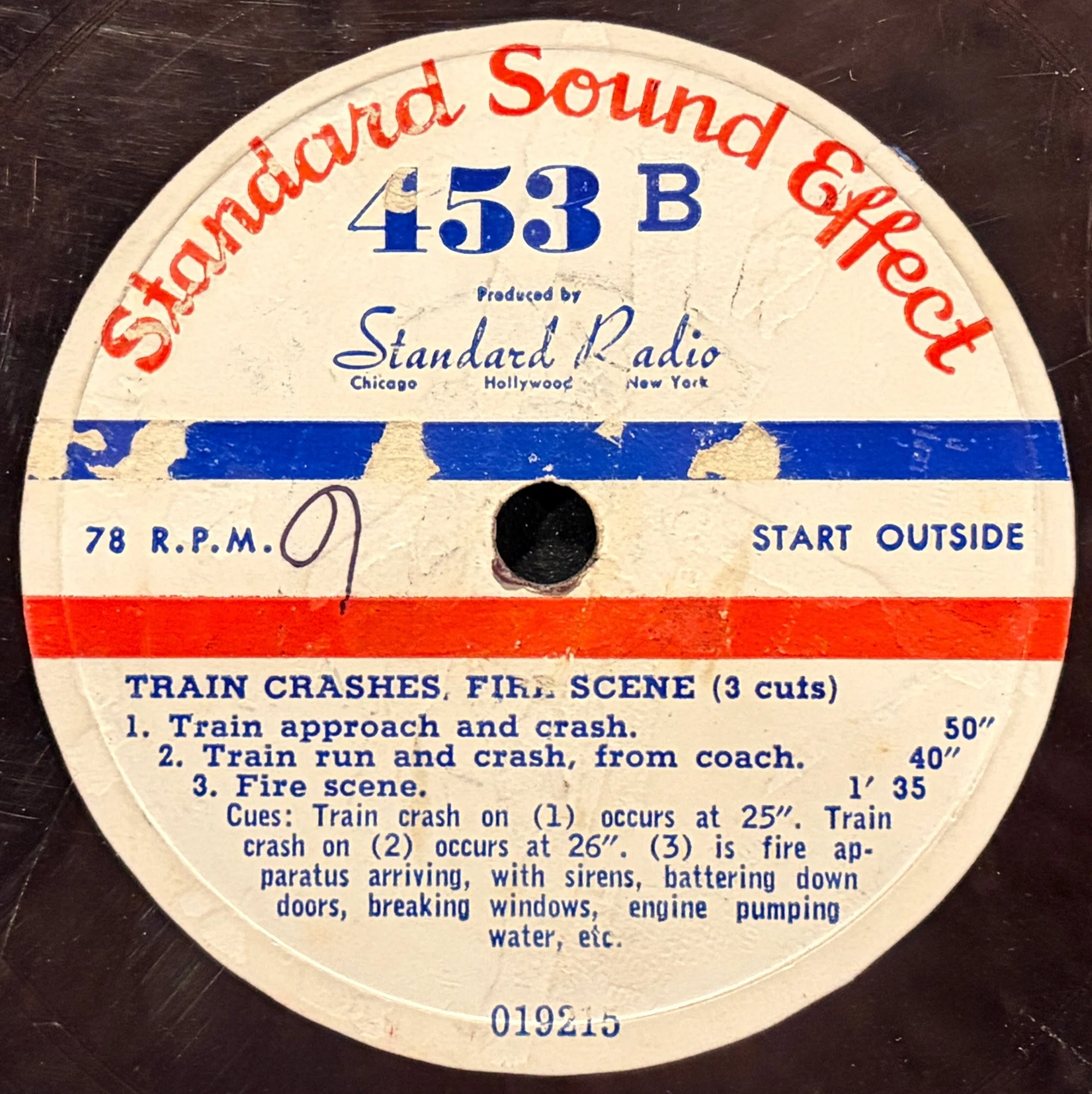
Standard Radio produced the “Standard Sound Effect” library specifically for use at radio stations or production studios. The track on side A is a continuous scene of a passenger station. This would be very useful if the sound engineer for the Jack Benny program needed to create the atmosphere for Jack waiting at the train station in Los Angeles for Mary Livingstone to return from visiting her sister Babe. All the while, the “racetrack tout” is harassing Jack with his sly “Hey Bud” call, and Mel Blanc is performing as the station announcer; “Train leaving on track 5… for Anaheim… Azusa… and Cucamonga.”
Side B of the record is a bit more disturbing. If the sound engineer needed the effect of a train running at full speed then suddenly crashing as a spectacular wreck, then this is the record he’d use. In fact, you get the crash effect of what it would sound like from inside the coach car. I don’t know how realistic these crash scenes are, but I don’t want to compare them to anything anytime in the near future.
Of course, a train crash wouldn’t be complete without the sound of the fire department arriving at the disaster with sirens blaring, followed by the sounds of breaking glass and smashing wood.
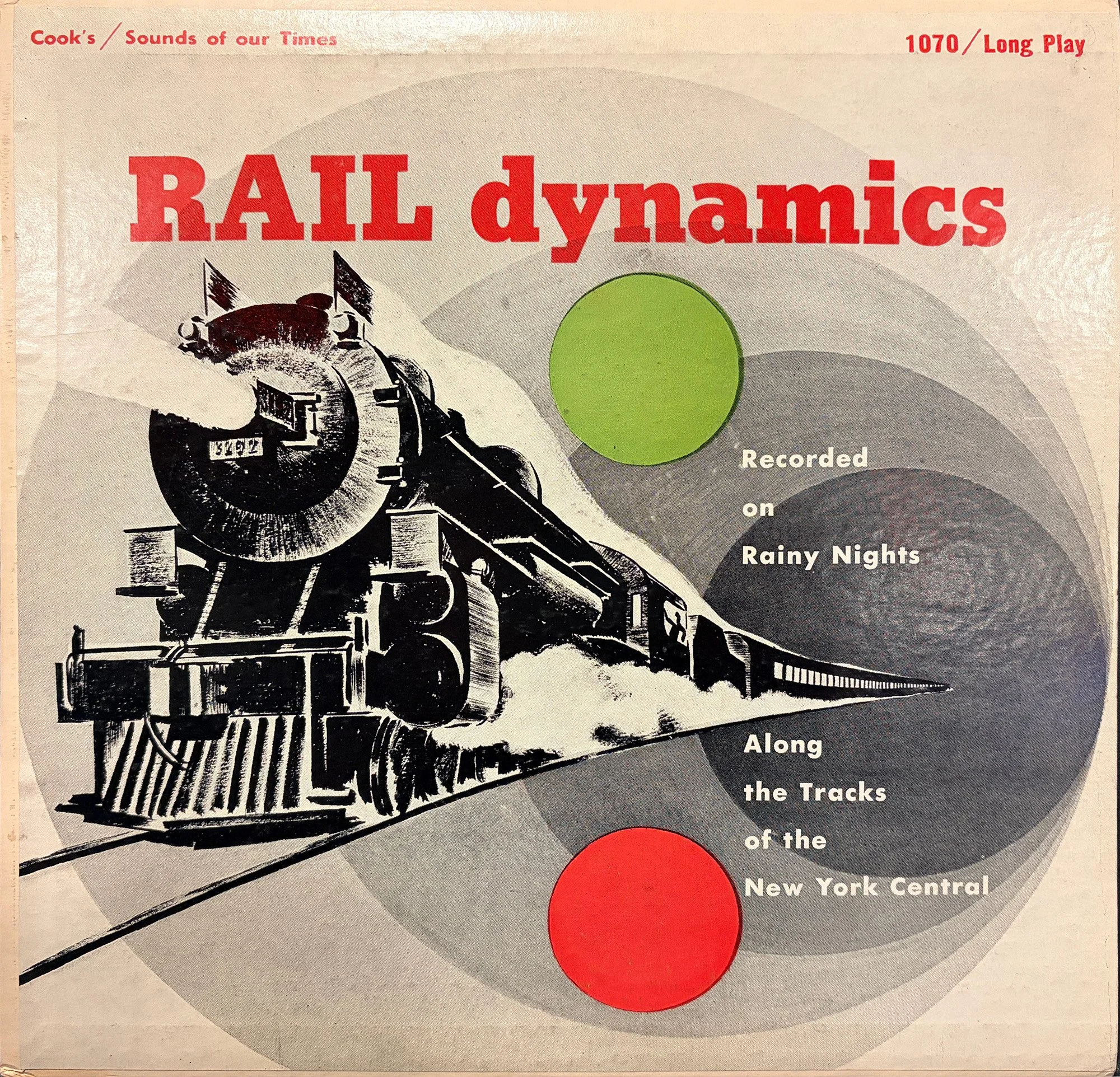
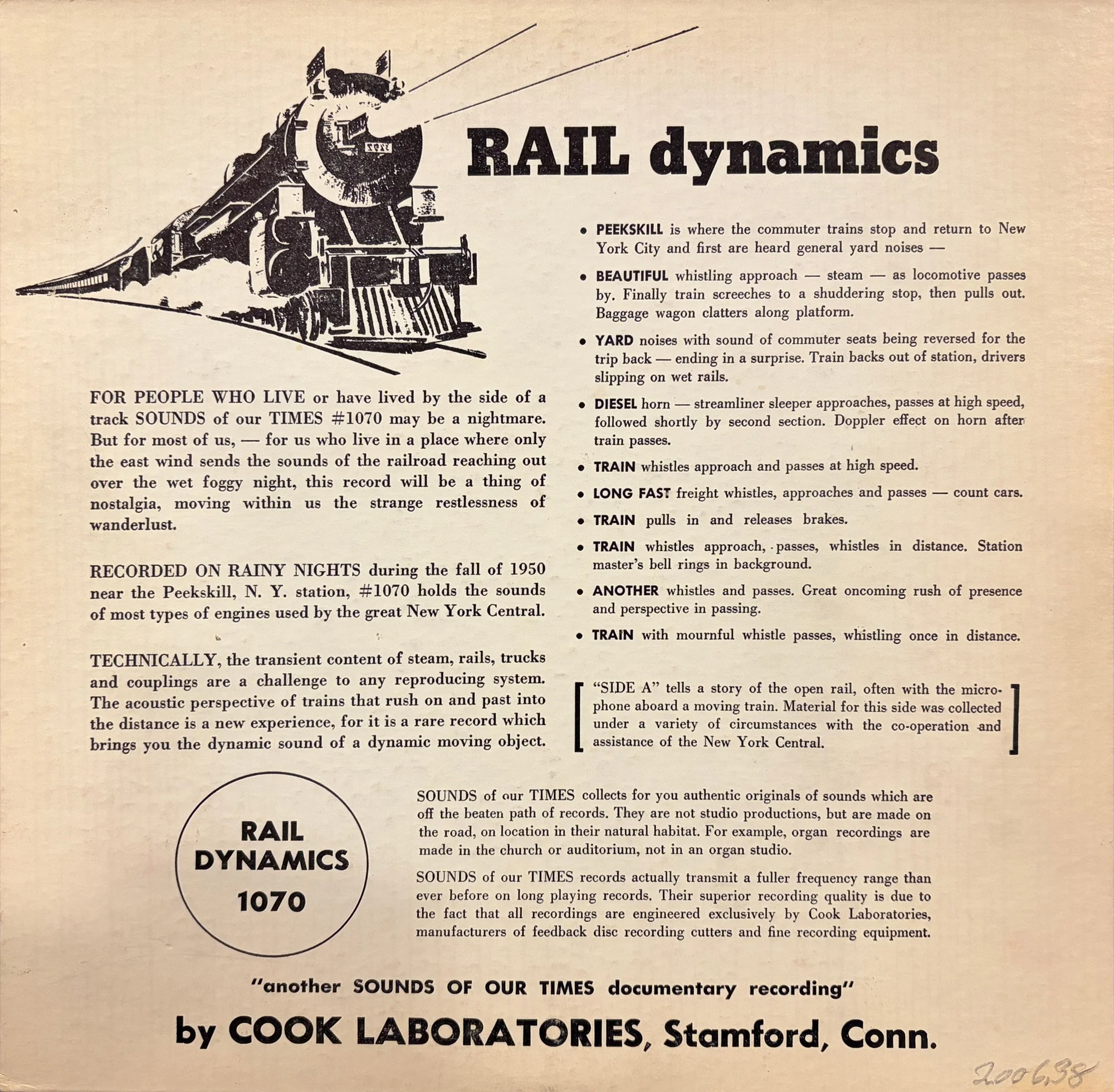
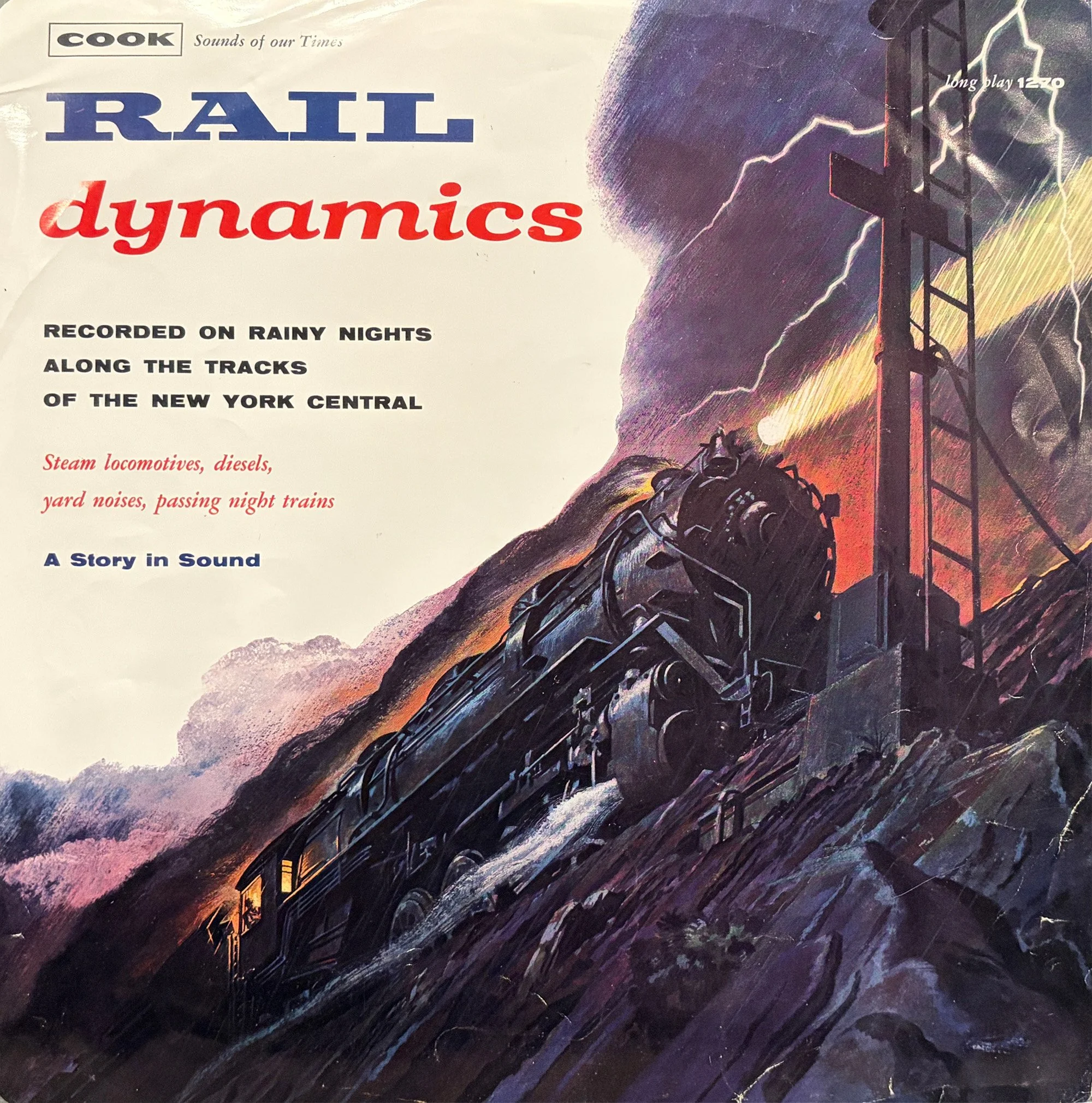
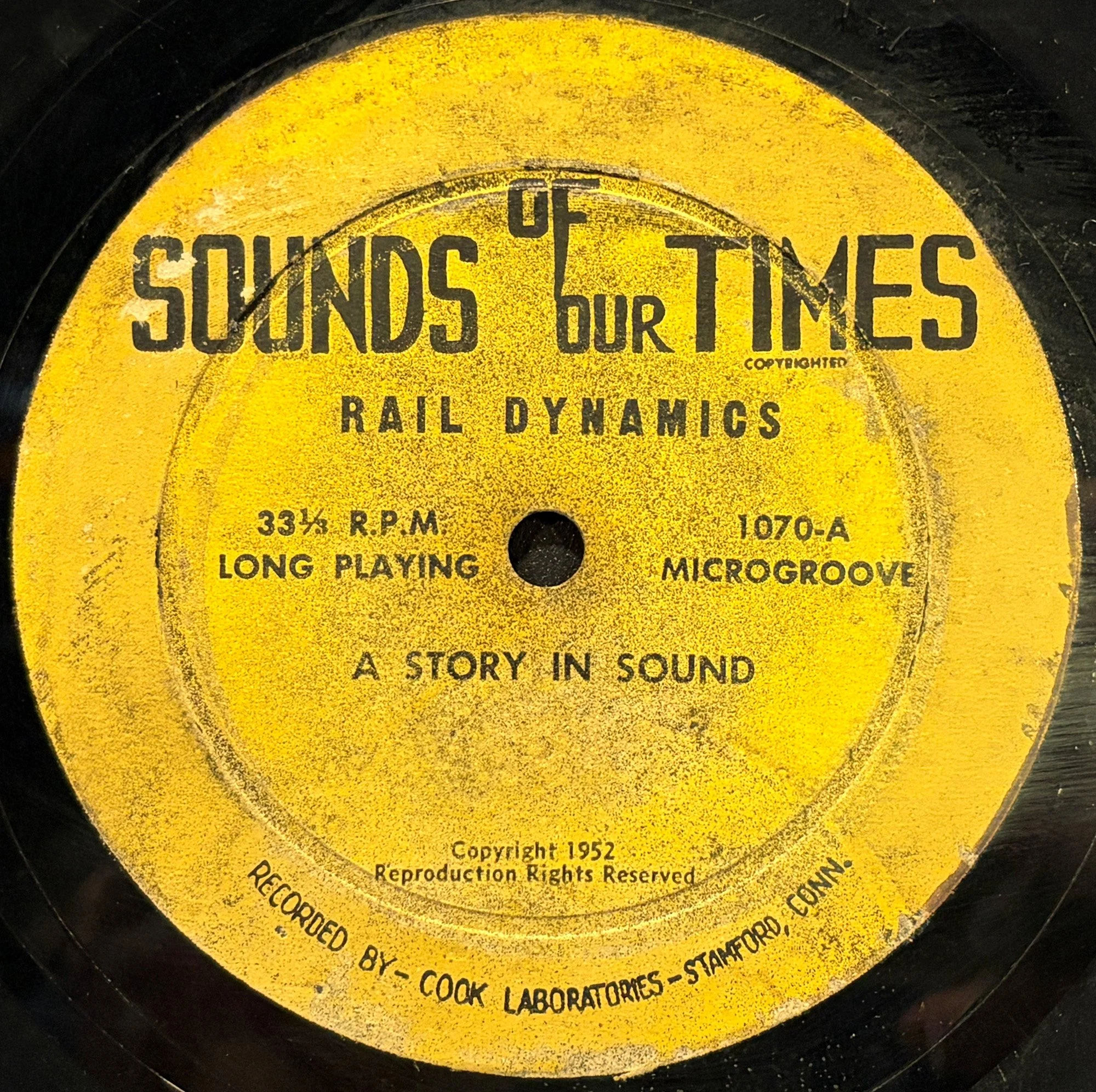
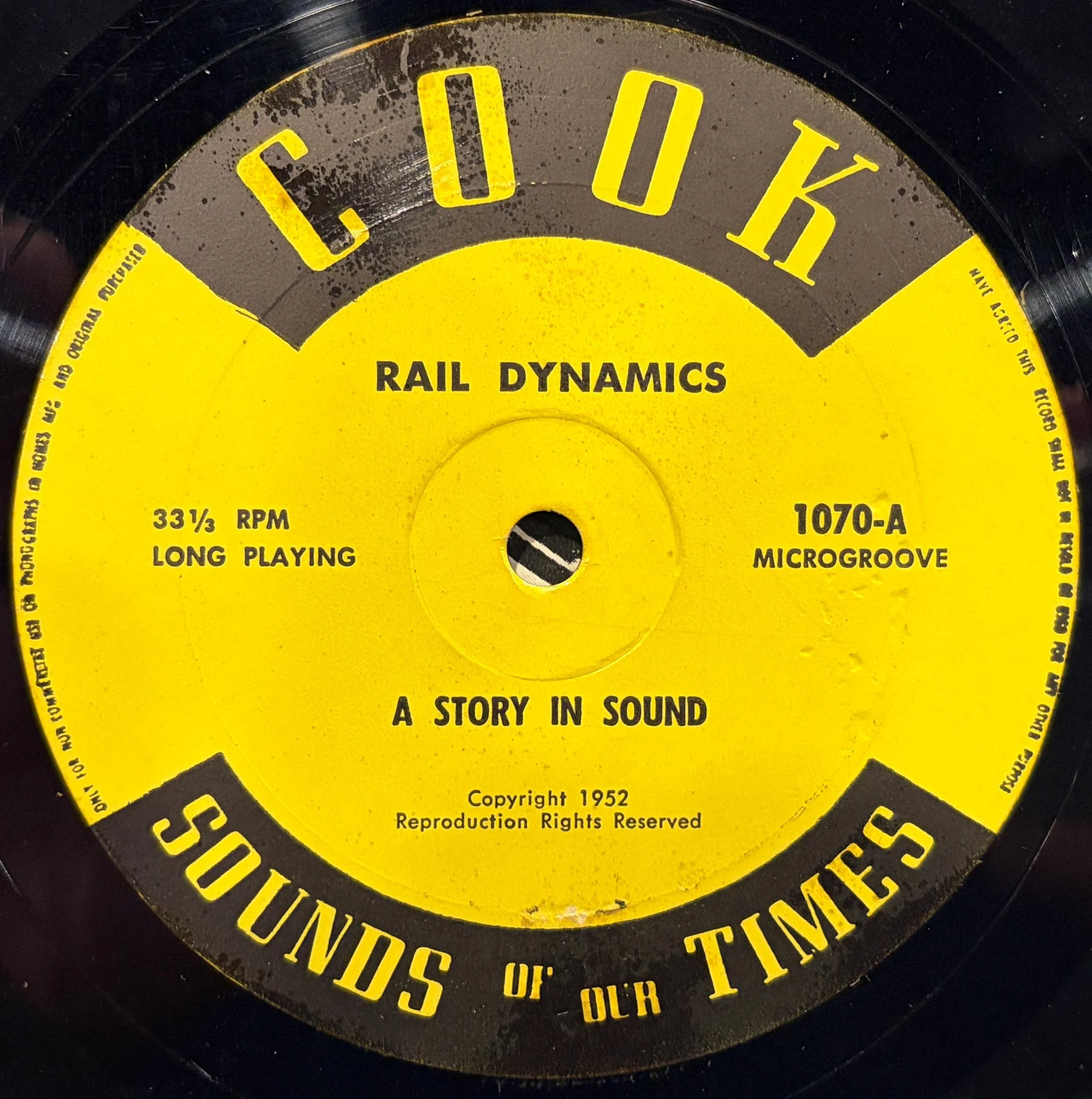
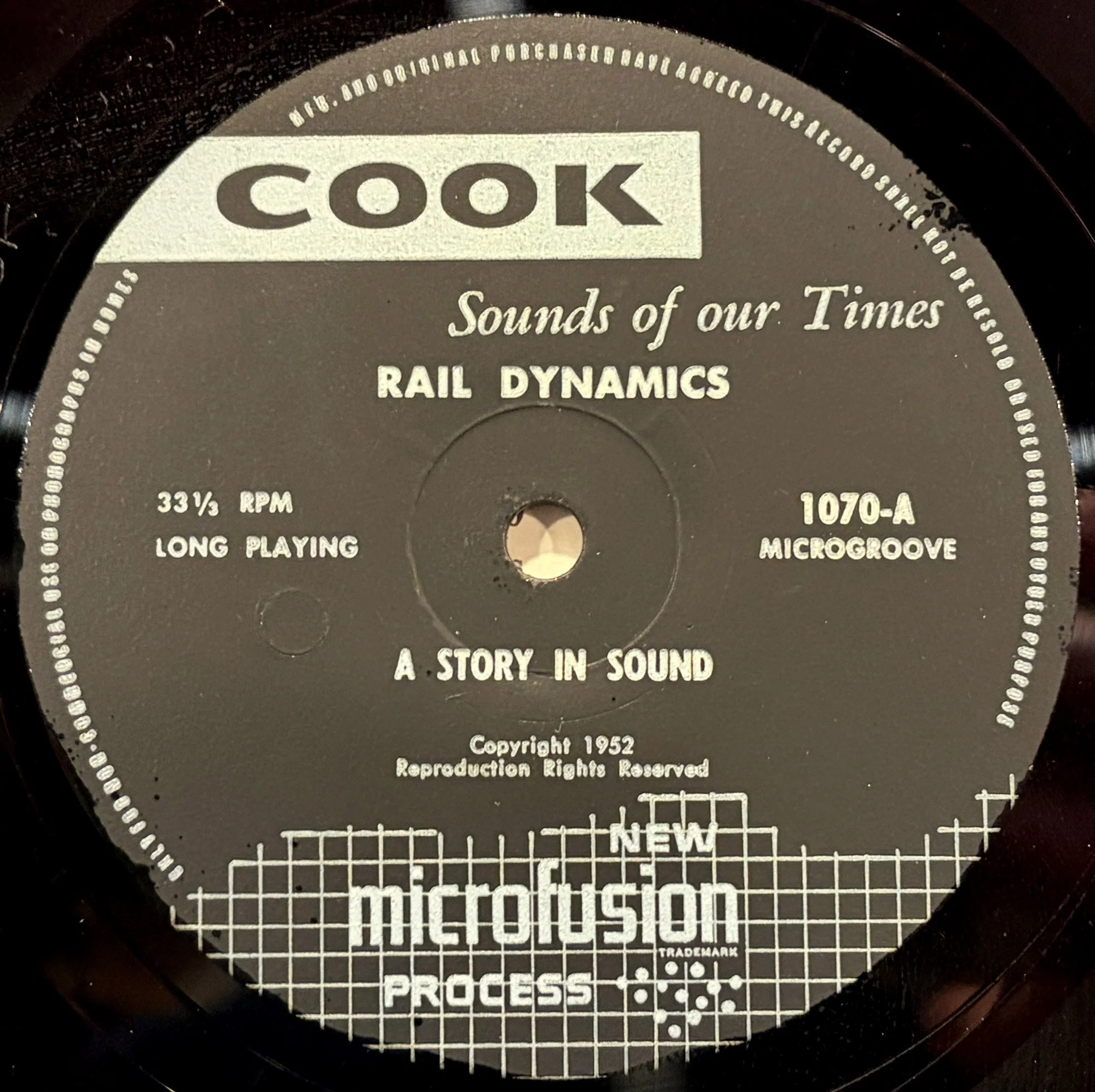
The record above is a favorite in my collection not simply for the fact that it’s a great recording, but primarily because the 10” version I have was once owned by John Prophet. This record was one of John’s favorites as well. I’m featuring only side A of the record; “A Study in Sound.” Released in 1952, Rail Dynamics put the realism in the recording by placing the microphone right on the New York Central train it features. I’m sure you realized that this record was not played at 78 rpm even though it’s was initially released as a 10” LP. Even though all three record formats were around by 1952 - 7” 45 rpm, 10” 78 rpm, and 10” 33 1/3 rpm (with 78 still in use although beginning to wane in popularity), Cook Laboratories knew there was no way they’d be able to release “A Story in Sound” in its entirely if it was limited to producing the track at three minutes or less; which was the maximum length you could put on a 10” 78rpm record. The 7” 45 was not quite the popular format it would eventually become just a few years later.
What really makes this record special for me is the fact I have a 7” magnetic tape copy of the record that John recorded for his friend John Clark; a fellow member of the Buffalo Chapter of the NRHS and served as the Chapter’s President from 1946 to 1969. Just prior to “A Study in Sound” appearing on the tape, John Clark waxes poetic about the demise of the steam engine and how he and John (Prophet) are going to do their part to ensure the sounds of the classic steam engine are never forgotten.
E N D